Introduction
In modern competitive sport, anti-doping regulations are intended to ensure fairness, integrity, and a level playing field for all athletes. However, despite the existence of standardized frameworks such as the World Anti-Doping Agency (WADA) Code, the credibility of these systems has increasingly been questioned. In particular, allegations of “favoritism” by doping authorities have emerged whenever high-profile players appear to receive more lenient treatment than their lesser-known counterparts. As a result, public trust in anti-doping enforcement has been placed under sustained scrutiny.
Over the past several years, a series of high-visibility cases across tennis, athletics, swimming, cycling, and other global sports have intensified this debate. Suspensions that were shortened, bans that were strategically timed, and explanations that were readily accepted by authorities have led fans, fellow athletes, and analysts to question whether rules are being applied equally. Although official bodies have consistently defended their decisions as evidence-based and procedurally sound, perceptions of unequal enforcement have continued to grow—particularly when elite athletes or powerful sporting nations are involved.
This article explores the Top 10 Shocking Cases of Favoritism in Anti-Doping Rules, drawing on current events, documented rulings, and public reactions from within the sporting community. By examining how these controversies unfolded and why they provoked criticism, a clearer understanding is provided of the systemic challenges facing global anti-doping governance today.
1. Jannik Sinner (Tennis) – Alleged Leniency in Anti-Doping Enforcement

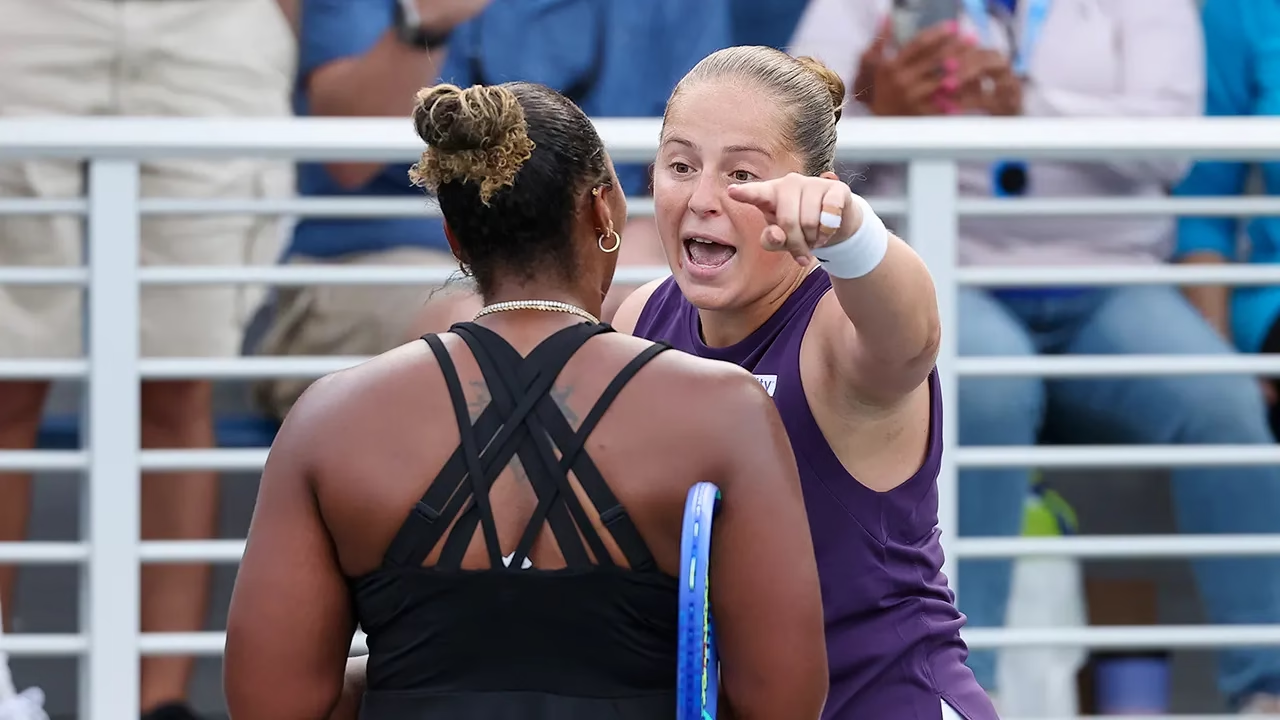
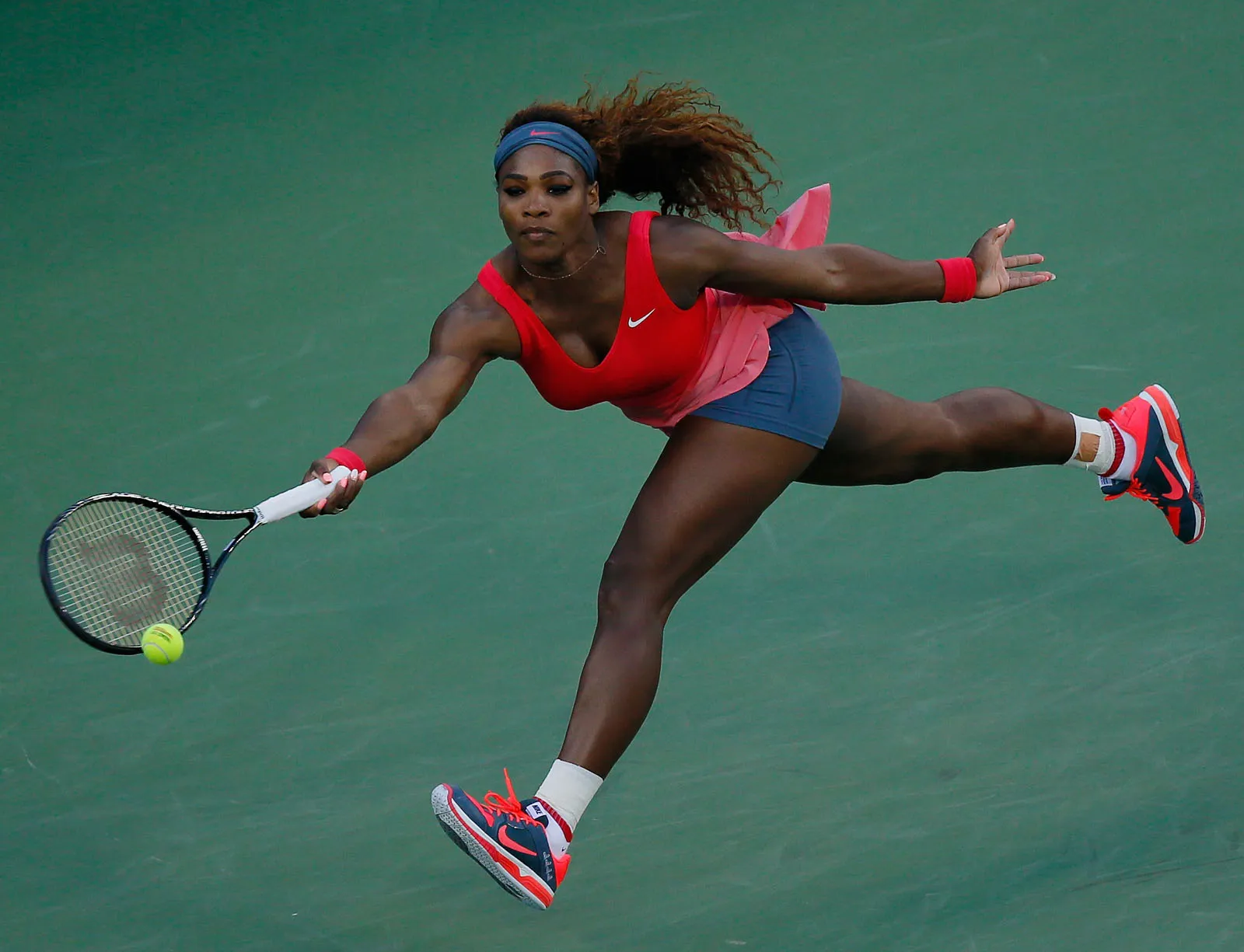
Italian tennis star Jannik Sinner has become the centerpiece of a major debate over perceived favoritism by anti-doping authorities. In 2024, Sinner accepted a three-month ban after testing positive for the banned substance clostebol. The International Tennis Integrity Agency (ITIA) and WADA reached a settlement that allowed him to serve the ban in a way that ensured he did not miss any Grand Slam tournaments. This outcome triggered widespread debate among his peers, who argued that the punishment was essentially timed to minimize competitive impact on a top-ranked player.
World No. 1 Novak Djokovic publicly stated that a “majority of the players feel like there is favoritism” in the anti-doping system and criticized the process as inconsistent and influenced by a player’s status and access to legal resources. Djokovic highlighted discrepancies between Sinner’s settlement and harsher sanctions applied to other athletes in similar situations, such as Simona Halep and Tara Moore, reinforcing the perception of unequal treatment.
This case has become emblematic of modern criticism of anti-doping authorities — not because Sinner’s violation was necessarily disputed, but because the perceived penalty softness raised questions about fairness and transparency.
Sinner’s suspension was widely viewed as unusually short, particularly because it was structured in a way that did not require him to miss any Grand Slam tournaments or major ATP events, thereby minimizing its competitive impact. As a result, high-profile players, analysts, and commentators publicly argued that the outcome reflected a broader pattern of systemic favoritism, suggesting that elite and commercially valuable athletes may receive more negotiable or strategically timed sanctions than lower-ranked players. Consequently, the handling of Sinner’s case intensified scrutiny of the International Tennis Integrity Agency and WADA, and it ultimately contributed to renewed calls from within the tennis community for greater transparency, consistency, and reform in the sport’s anti-doping enforcement framework.
2. Iga Swiatek (Tennis) – Short Ban Raises Eyebrows
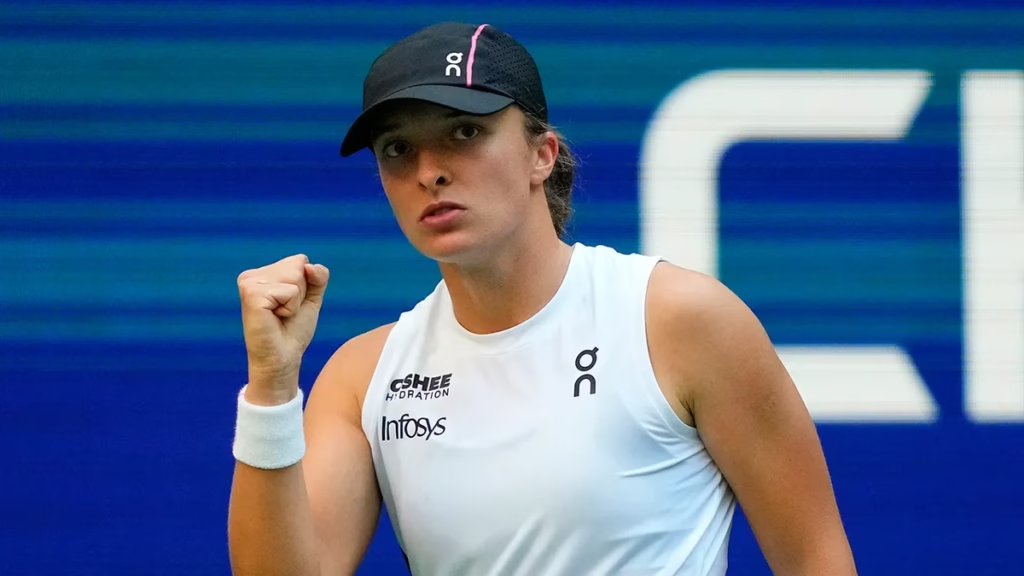
Polish tennis star Iga Swiatek served a one-month suspension in late 2024 after testing positive for trimetazidine, a banned substance. While Swiatek accepted the penalty without lengthy appeal, fans and analysts drew comparisons with other athletes whose sanctions were either more severe or prolonged. Although the ITIA and WADA maintained that her fault was unintentional and minor, critics suggested that her position as a Grand Slam champion could influence leniency — especially in contrast to stricter outcomes in other cases.
The general perception among some quarters of the tennis community is that highly marketable players may benefit from more negotiable outcomes, even when the rules are ostensibly uniform.
Iga Swiatek’s suspension was widely regarded as notably brief given that a banned substance had been detected, which immediately drew attention from both analysts and fellow professionals. Although anti-doping authorities emphasized that the violation was unintentional and involved minimal fault, the one-month sanction was viewed by critics as disproportionately lenient when compared with penalties imposed in similar cases. As a result, Swiatek’s situation was frequently juxtaposed with those of lower-profile players who, despite comparable circumstances, were subjected to significantly longer provisional suspensions and prolonged investigative timelines. Consequently, the case was cited as a contemporary example of how athlete status and visibility may influence disciplinary outcomes, thereby reinforcing ongoing concerns about consistency and equal treatment within the anti-doping system.
3. Chinese National Swimmers – WADA and CHINADA Controversy
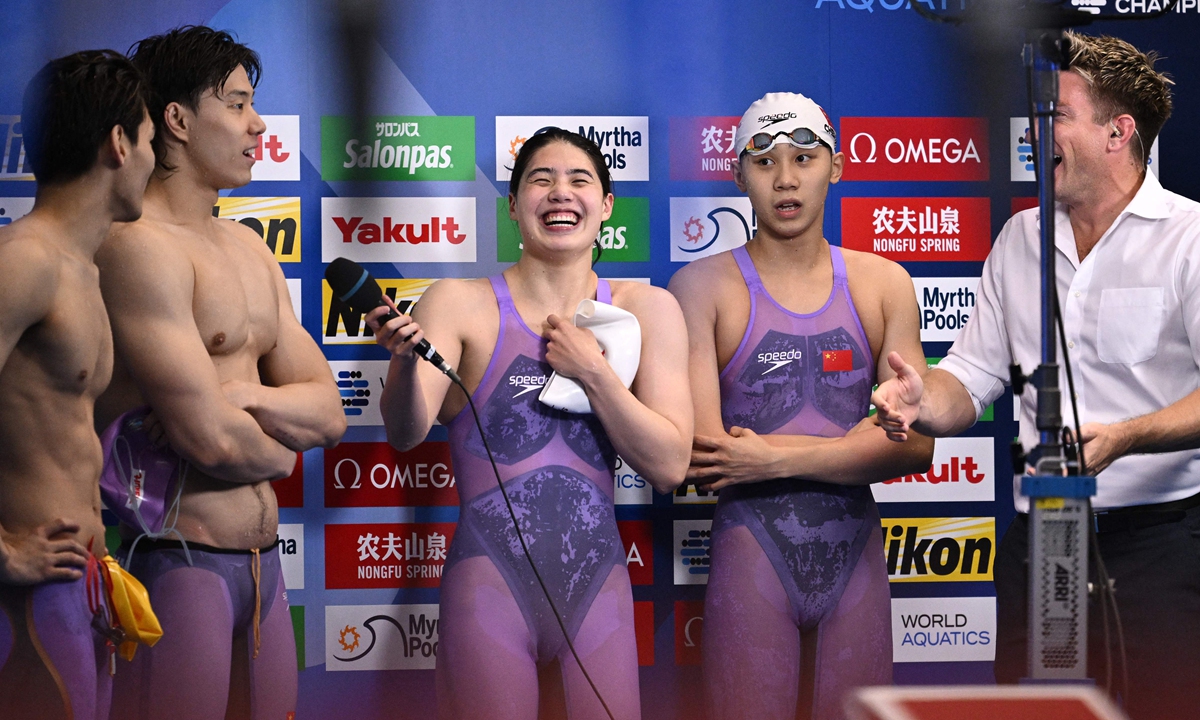
A recent report examined the handling of a case involving Chinese swimmers who tested positive for trimetazidine (TMZ) during domestic competition in 2020-2021. The Chinese Anti-Doping Agency (CHINADA) concluded that the positive tests resulted from contaminated food and did not impose sanctions. WADA accepted this explanation, allowing 11 of these athletes to compete at the 2024 Paris Olympics without penalty.
Critics — particularly from the U.S. Anti-Doping Agency (USADA) — charged that WADA’s acceptance of the explanation without penalties represented differential treatment. USADA’s chief publicly called for stronger rules, suggesting that clean athletes deserved equitable protection and that the process may have favored a major sporting nation’s athletes.
Even though a Swiss prosecutor’s review stated that WADA acted properly, the perceived softness of sanctions continued to fuel arguments about inconsistent enforcement.
The acceptance of contamination as an explanation allowed several Chinese athletes to compete without receiving formal sanctions, a decision that immediately attracted international attention. Although anti-doping authorities maintained that the ruling was based on scientific assessment and insufficient evidence of intent, critics argued that the outcome effectively set a precedent in which similar cases might be judged inconsistently. As a result, concerns were raised that unequal standards could emerge in doping enforcement, particularly when powerful sporting nations are involved. The broader debate has since centered on whether national influence plays a role in how evidence is interpreted and scientific explanations are validated, thereby intensifying calls for greater transparency and uniform application of anti-doping rules.
4. USADA and Non-Publication of Doping Violations
The U.S. Anti-Doping Agency (USADA) has faced allegations — indirectly supported by reports from press and anti-doping watchdogs — that it allowed certain high-level athletes who admitted to doping to continue competing without public disclosure or proper sanction, due to security or investigative considerations.
One APPEAL from media and advocacy outlets argued that USADA’s practices, at least in a few documented instances, included lifting provisional suspensions prematurely and failing to notify WADA when rules were ostensibly violated. WADA itself criticized these practices as contravening the World Anti-Doping Code.
This controversy is not tied to a single athlete’s name, but it has had significant implications for perceptions of fairness, especially when national bodies appear to protect their athletes or operate outside standard transparency protocols.
The non-publication of certain doping violations has been widely criticized for creating a perception of preferential treatment within the anti-doping system. When sanctions, provisional suspensions, or admitted violations are not disclosed publicly, transparency is weakened and trust in the enforcement process is undermined, particularly among clean athletes who expect equal accountability. Such practices have been viewed as benefiting select athletes or federations by shielding them from reputational damage, thereby fueling suspicions of favoritism. In response, the World Anti-Doping Agency (WADA) has emphasized that these situations reflect procedural or jurisdictional complexities rather than bias; however, WADA’s criticism of some national anti-doping agencies has also revealed deeper structural disagreements over enforcement norms, reporting obligations, and compliance with the World Anti-Doping Code. These disagreements have highlighted ongoing tensions within the global anti-doping framework and reinforced calls for clearer, more uniform standards of disclosure and accountability.
5. Lance Armstrong (Cycling) – Systemic Doping and Institutional Protection

Although Lance Armstrong’s lifetime ban and loss of Tour de France titles are widely regarded as just punishment, his case remains a historic reference point for discussion of favoritism — not by anti-doping authorities, but by sporting bodies that were slow to respond to systemic doping.
Armstrong’s sophisticated doping contrivances went undetected for years, despite widespread rumors and internal suspicion within cycling. Institutions such as the UCI were criticized for failing to act on early evidence, leading to accusations that marketable champions were implicitly protected by governing structures that feared reputational harm and financial loss.
While not a modern “favoritism” allegation in the strictest sense, Armstrong’s saga underscores how enforcement timing and institutional reticence can be interpreted as preferential.
For several years, Lance Armstrong successfully evaded detection due to widespread systemic failures within professional cycling’s anti-doping framework. Despite persistent allegations, suspicious performance data, and whistleblower accounts, governing institutions were slow to act, allowing him to continue competing and winning at the highest level. During this period, cycling authorities and related organizations were widely criticized for prioritizing the protection of a marketable star and the commercial image of the sport over rigorous enforcement and transparency. As a result, institutional inaction was perceived as an implicit shield for elite athletes, reinforcing long-standing concerns that star power and financial interests can influence the consistency of anti-doping oversight.
6. Ben Johnson (Track & Field) – Historical Case with Differential Reaction
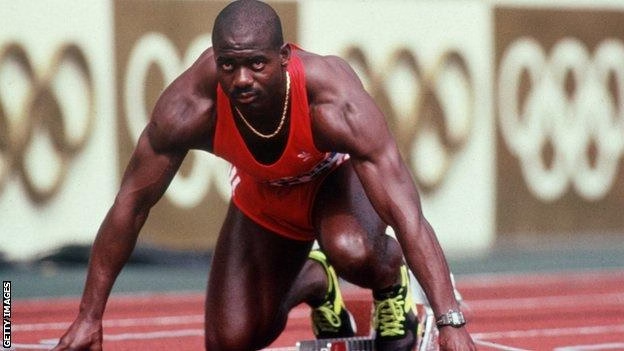
Canadian sprinter Ben Johnson was stripped of his 1988 Olympic gold medal after testing positive for stanozolol. While this case resulted in severe consequences, subsequent discussions highlighted that more powerful nations and athletes sometimes influence how aggressively anti-doping authorities pursue investigations or publicize findings.
Although Johnson’s case remains one of the clearest examples of anti-doping enforcement, later comparisons with other athletes who appeared to receive softer consequences contributed to athletes’ perception of inconsistency — and indirectly, favoritism.
Ben Johnson’s punishment was unequivocal and decisive, as he was stripped of his Olympic gold medal and publicly sanctioned following his positive test at the 1988 Seoul Games. As a result, his case has since been widely used as a benchmark for assessing the consistency of anti-doping enforcement across generations. In later years, however, comparatively lenient sanctions imposed on elite or high-profile athletes have been repeatedly contrasted with Johnson’s swift and severe punishment, thereby fueling ongoing debate about fairness, proportionality, and equal treatment within the global anti-doping system.
7. Maria Sharapova (Tennis) – Reduced Ban and Debate over Intent

Tennis great Maria Sharapova tested positive for meldonium at the 2016 Australian Open, leading to a two-year ban that was later reduced to 15 months after appeal. While her sanction was not contested by anti-doping authorities, the reduction based on intent and timing triggered discussion about whether elite status influenced the appeal outcome.
Sharapova claimed that she was unaware meldonium had been added to the banned list. Critics argued that the appeal process favored a high-profile athlete with access to top legal representation, in contrast with lesser-known competitors who may not receive similar benefit of doubt..
Maria Sharapova’s doping case became a focal point in discussions about favoritism within anti-doping enforcement after her original two-year suspension for testing positive for meldonium was significantly reduced to 15 months on appeal. The reduction was granted after the Court of Arbitration for Sport accepted arguments that her violation was unintentional and linked to confusion surrounding the substance’s recent inclusion on the banned list. Nevertheless, the outcome generated widespread debate within the tennis community, as critics argued that Sharapova’s global profile, financial resources, and access to elite legal representation may have played a decisive role in securing a more favorable ruling—advantages that are often unavailable to lower-ranked or lesser-known athletes facing similar violations.
8. Justin Gatlin (Athletics) – Repeat Offender with Reduced Sanctions
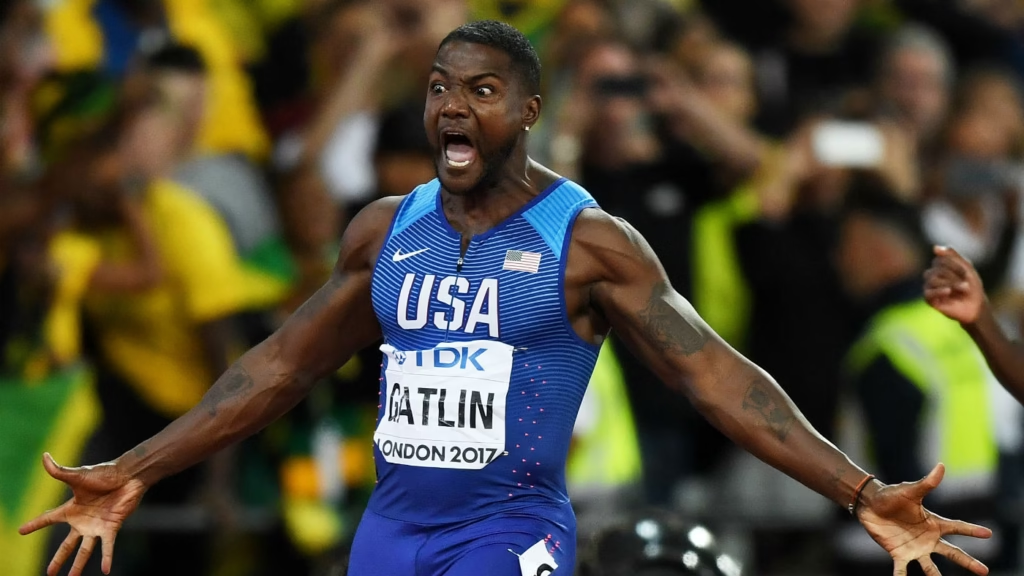
American sprinter Justin Gatlin received multiple doping violations, including an eight-year ban that was later reduced to four years. While officially this reduction was a result of arbitration, critics and fans expressed skepticism, claiming that star athletes with resources are more likely to secure favorable revisions.
Though not a direct allegation of favoritism by anti-doping authorities, the optics of a repeat offender reclaiming competitive status fueled debate over consistent enforcement for high-profile athletes versus lower-ranked competitors.
Justin Gatlin, the American sprinter, faced multiple doping sanctions throughout his career, including an initial eight-year ban that was later reduced to four years following arbitration. While the reductions were officially justified by procedural and technical considerations, the case sparked widespread debate about fairness in anti-doping enforcement. Many observers argued that elite athletes with access to top legal and scientific resources may be able to negotiate more favorable outcomes than their lower-profile counterparts, highlighting potential inconsistencies in how sanctions are applied across the sport.
9. Indian Athletes / National Disparities – Systemic Inequality in Doping Enforcement

Critics have also pointed to systemic disparities in anti-doping enforcement based on nationality and economic resources. An investigative review noted that in some countries, such as India, athletes face greater hurdles in appealing doping sanctions due to high costs, lack of technical support, and delayed proceedings. Only 1 out of over 1,200 sanctioned athletes has appealed to the Court of Arbitration for Sport (CAS), not necessarily because they accepted guilt but because the process is prohibitively expensive and slow.
In contrast, athletes from developed nations often access legal aid, expert witness support, and expedited hearings. While this is not a specific person, it reflects a form of structural favoritism, where athletes with access to robust resources fare better in anti-doping adjudication.
Athletes from lower-resource nations often face significant legal and procedural barriers in doping enforcement, including limited access to expert legal representation, delayed hearings, and insufficient scientific support for appeals. These challenges make it far more difficult for them to contest sanctions or navigate complex anti-doping processes effectively. In contrast, competitors from wealthier countries frequently benefit from robust legal teams, expedited proceedings, and access to expert testimony, creating an uneven playing field. This systemic disparity has fueled perceptions of unequal treatment, reinforcing the notion that the application of anti-doping rules can favor athletes with greater resources and influence.
10. US Athletes and WADA Trust Issues (Phelps/Schmitt Testimony)
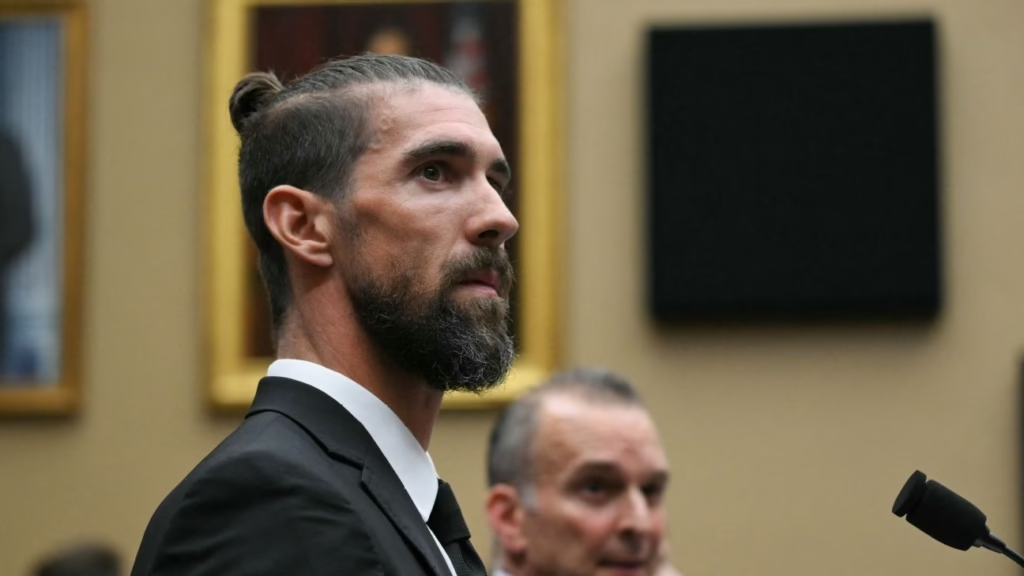
In testimony before a U.S. congressional subcommittee, legendary swimmer Michael Phelps and multiple gold medalist Allison Schmitt expressed concerns about WADA’s handling of doping cases, particularly surrounding allegations that 23 Chinese swimmers who tested positive for TMZ were allowed to compete due to procedural handling.
Phelps argued that such decisions erode athlete trust in anti-doping systems and foster perceptions that certain athletes are effectively shielded from consequences if broader political or logistical interests are at stake.
Testimony from U.S. Olympians, including Michael Phelps and Allison Schmitt, highlighted a growing erosion of trust in anti-doping authorities, as athletes questioned whether rules were applied consistently across nations. These concerns were particularly linked to broader disputes involving Chinese swimmers, who were allowed to compete despite testing positive for banned substances, and the World Anti-Doping Agency’s (WADA) handling of these cases. Critics argued that such decisions created the perception that high-profile athletes or powerful sporting nations could receive preferential treatment, undermining confidence in the fairness and transparency of global anti-doping governance.
Conclusion
Allegations of favoritism in doping enforcement are not new, but they have garnered renewed attention due to recent cases involving high-profile athletes, procedural irregularities, and public criticism from within the athletic community. Whether driven by legal inequality, institutional incentives, or inconsistent application of rules, these controversies highlight the need for transparency and standardized enforcement.
Understanding these cases — from Jannik Sinner and Iga Swiatek in tennis to institutional disparities affecting Indian athletes and doping authority practices in major federations — is essential for athletes, fans, and policymakers alike.
For future reforms to be effective, anti-doping authorities may need to strengthen transparency, ensure proportional sanctions regardless of status, and address structural inequalities in adjudication.
Read more of the latest trending sports news here.