Introduction
Artificial intelligence is advancing at a pace that would have seemed impossible just a few years ago. Every week, innovative tools, powerful models, and radically new platforms break into the mainstream, reshaping how we work, create, and interact with technology. In the first week of January 2026, no fewer than 10 AI tools dramatically rose in popularity, adoption, integration, or media coverage — each with its own story, unique value, and potential impact on industries ranging from creative content and software development to robotics and personal productivity.
This article highlights the top 10 AI tools that exploded this week — why they matter, how they’re being used, and what makes them stand out in today’s intensely competitive AI landscape.
1. GPT-5.2 and GPT-5.2 Codex — OpenAI’s Latest Breakthrough AI Model
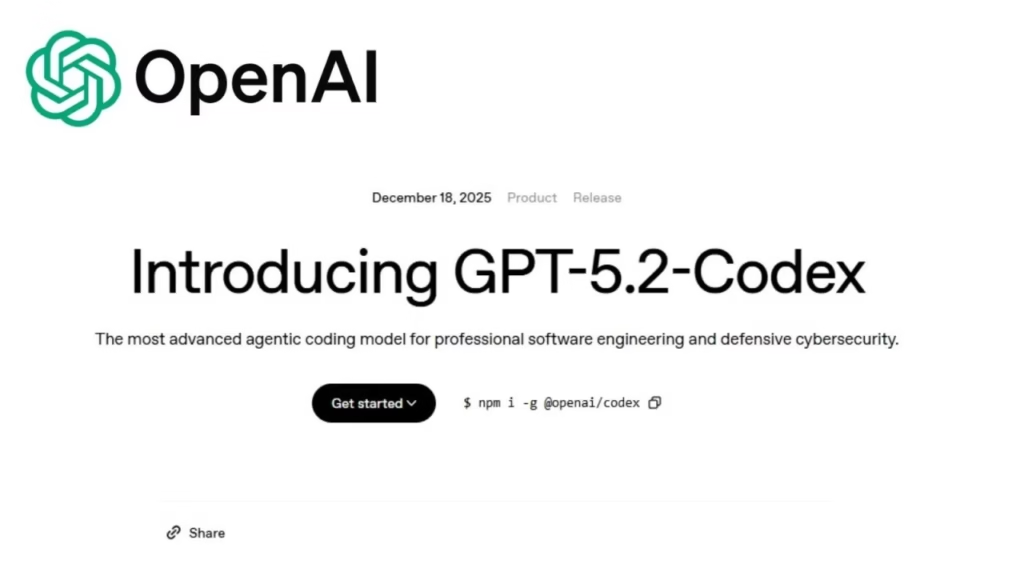
In mid-December 2025, OpenAI officially launched GPT-5.2, a highly advanced language model designed for professional-grade reasoning, long-context comprehension, vision integration, and “agentic” task execution. The update has been so widely adopted that it continues to rage through January 2026 discussions among developers and enterprises alike.
What sets GPT-5.2 apart from its predecessors is its ability to go beyond simple text responses — it can plan, integrate data from files, and serve as the cognitive engine behind autonomous AI agents in workplace automation and complex workflows. While OpenAI’s official release notes emphasize its improvements in reasoning and context awareness, GPT-5.2 Codex — the coding-optimized variant — has especially surged among developers building real products, making it one of the most talked-about AI tools this week.
It exploded this week due to rapid adoption across enterprise environments and developer workflows, driven by seamless integration with task automation and professional tools. In addition, newly released industry benchmarks highlighted significant performance gains, reinforcing its value and accelerating widespread interest and usage.
2. Google Gemini 3 Flash — Speed-Optimized Multimodal AI
At the end of December 2025, Google introduced Gemini 3 Flash, the latest version of its multimodal AI model designed to work across text, images, and video, with dramatically faster performance.
Gemini’s footprint extends across Android apps, web search, Gmail, Drive, and Workspace integrations, offering users a deeply integrated AI experience without needing separate tools. It has been embraced by professionals who need rapid research, content generation, and multimodal understanding — all from one unified model.
It exploded this week due to its seamless integration across Google’s ecosystem, allowing users to work more efficiently without switching platforms. In addition, dramatic improvements in speed and responsiveness made the tool noticeably more reliable for real-time tasks. As a result, content creators, marketers, and enterprise teams rapidly adopted it to streamline workflows and enhance productivity.
3. Nano Banana Pro — Viral AI Image Generation Sensation
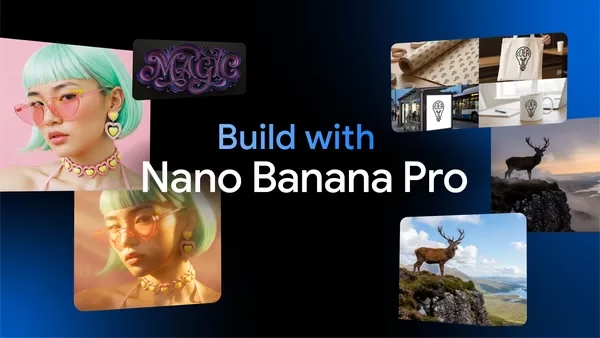
Although its initial release was in 2025, Nano Banana Pro — officially known as Gemini 3 Pro Image — continues to dominate social media and creative communities into January 2026. This AI image generation and editing tool went viral because of its ability to produce highly photorealistic “3D figurine” images and creative edits with plain-language prompts, especially on platforms like X (formerly Twitter).
Users have been sharing their creations widely, turning the tool into a cultural phenomenon rather than just a technical product. Its viral momentum has not subsided, making Nano Banana Pro a top AI tool that exploded this week due to continued widespread user adoption.
It exploded this week because it offers exceptional image-editing capabilities using simple, intuitive prompts, making advanced visuals accessible to a wide audience. At the same time, widespread viral sharing across social media platforms significantly boosted its visibility and user adoption. Additionally, its seamless cross-platform availability through Google Gemini and related apps made it easy for users to access and experiment with the tool across multiple devices.
4. Google Antigravity — The AI-Powered Coding Environment
Google Antigravity is an AI-assisted integrated development environment (IDE) that was publicly previewed in late 2025 and is now gaining explosive attention among developers. Built by Google and powered by multiple AI models including Gemini 3 Pro and Anthropic’s Claude, Antigravity enables developers to delegate complex coding tasks to autonomous AI agents.
Because software development teams have been quick to adopt tools that dramatically accelerate coding workflows, Antigravity has quickly become one of the most buzzed-about AI platforms this week.
It exploded this week because autonomous coding task delegation was introduced, allowing developers to offload complex programming work with minimal oversight. In addition, wide framework and language support made the tool accessible to a broad range of development teams. Finally, early community adoption and strong developer word-of-mouth accelerated visibility and trust, driving rapid interest and usage.
5. Manus — Autonomous AI Agent Platform
Manus is an autonomous AI agent designed to perform complex real-world tasks with minimal human intervention. Built by a Singapore-based startup, this agent has been gaining intense interest within tech communities and startup ecosystems.
Unlike traditional AI chatbots that require ongoing prompt input, Manus agents conceptualize, plan, and execute tasks end-to-end — making them arguably the first wave of true digital autonomous assistants.
It gained significant attention this week due to growing discussions around AI independence and automation, supported by live demonstrations showcasing fully autonomous task execution. Additionally, rumored investment interest from Meta fueled market excitement, further amplifying visibility and industry conversation.
6. DeepSeek V3.2 — The Chatbot Redefining User Growth Metrics
DeepSeek, a generative AI chatbot developed by Chinese AI firm DeepSeek, surged through global usage rankings throughout 2025 and continues to be hot in early 2026. Ranking among the most popular AI tools worldwide by monthly visits, DeepSeek has particularly excelled due to its compelling user experience and rapid expansion.
Its combination of powerful reasoning, practical interface, and high accessibility made it one of the fastest-growing AI apps this week as developers and users seek alternatives to legacy chat models.
It exploded this week due to its rapidly growing global user base, powerful generative capabilities, and wide availability across both web and mobile platforms.
7. Kimi K2 — Moonshot Open-Source Agentic AI Power Tool
Among the hidden gems in the AI ecosystem is Kimi K2, an open-source generative AI platform that is rapidly gaining traction. Kimi’s standout capability is its advanced agentic behavior — the ability to select from hundreds of tools to autonomously complete complex tasks without repeated manual prompting.
Kimi’s flexible architecture, lower API costs, and community–friendly ethos have made it one of the most talked-about AI solutions among developers, open-source communities, and digital innovators this week.
It exploded this week due to its agentic autonomy built into a low-cost, open API, strong support from open-source advocates, and rapidly expanding community contributions.
8. AI-Powered Browsers: Norton Neo & Opera Neon
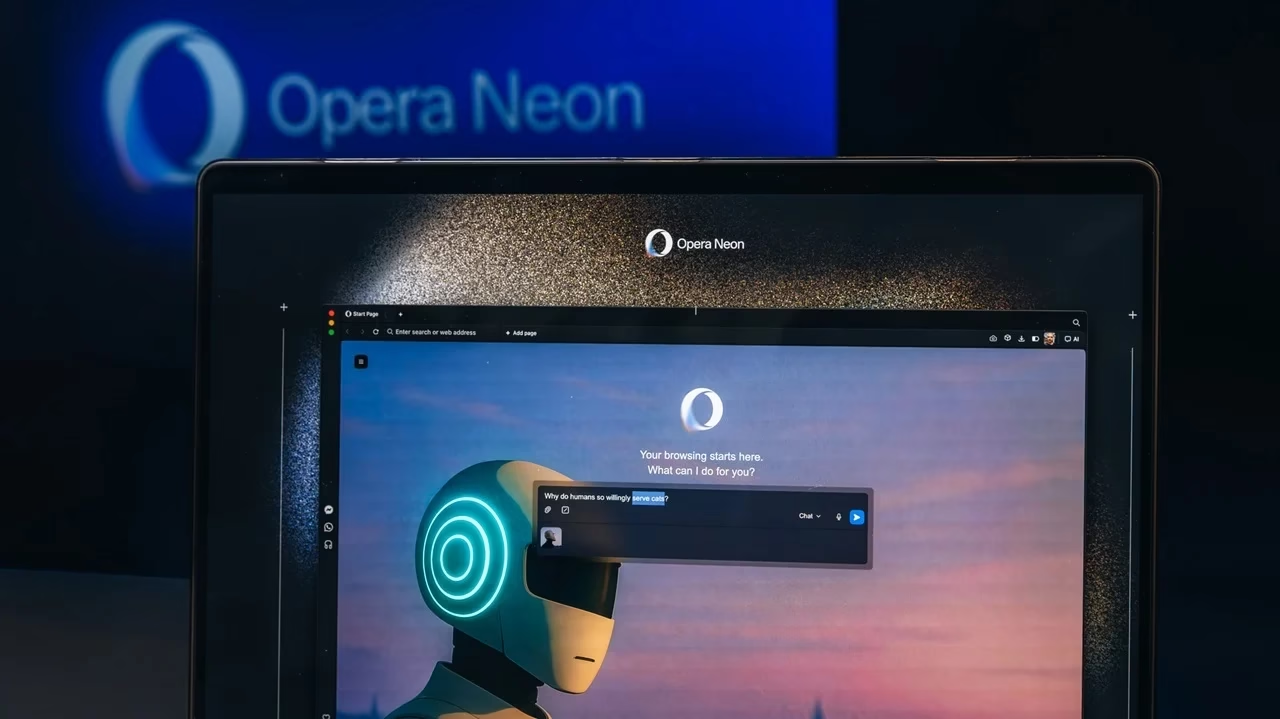
AI-native browsers hit a pivotal moment this week with launches like Norton Neo and Opera Neon, which integrate conversational AI and automation into everyday web experiences. Norton Neo’s safety-first approach blends AI with cybersecurity protection, while Opera Neon focuses on context-aware tab intelligence and task automation.
These AI-native browsers are not merely web interfaces — they represent AI assistants within our everyday digital environments, enabling proactive guidance, summarization, research synthesis, and contextual automation without interrupting user workflows.
They exploded this week due to the seamless integration of AI into daily browsing activities, offering both enhanced security and productivity, while gaining strong early enthusiasm from users.
9. LG CLOiD — AI Home Robot with Real-World Chore Capabilities
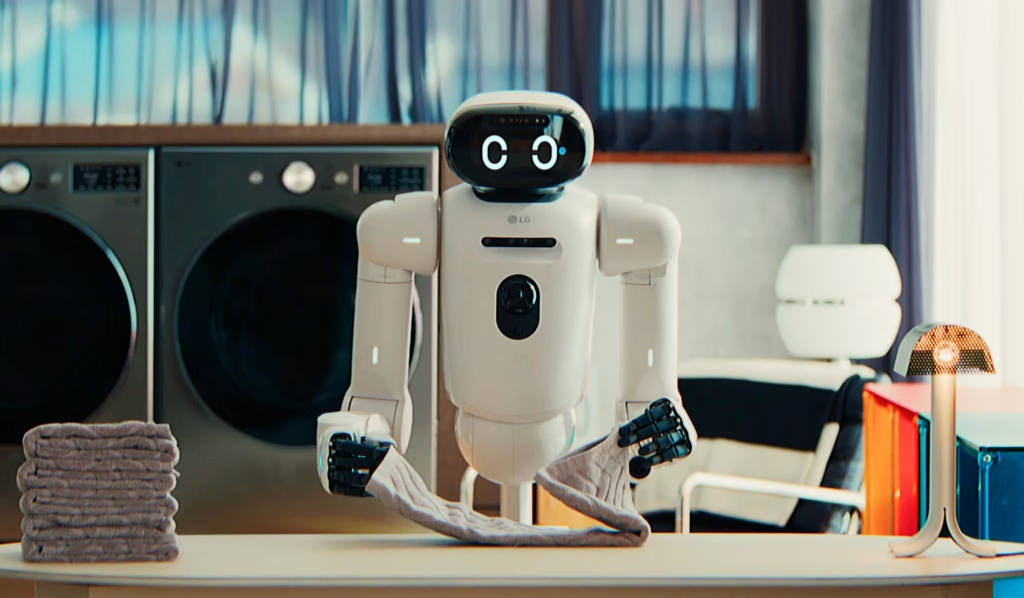
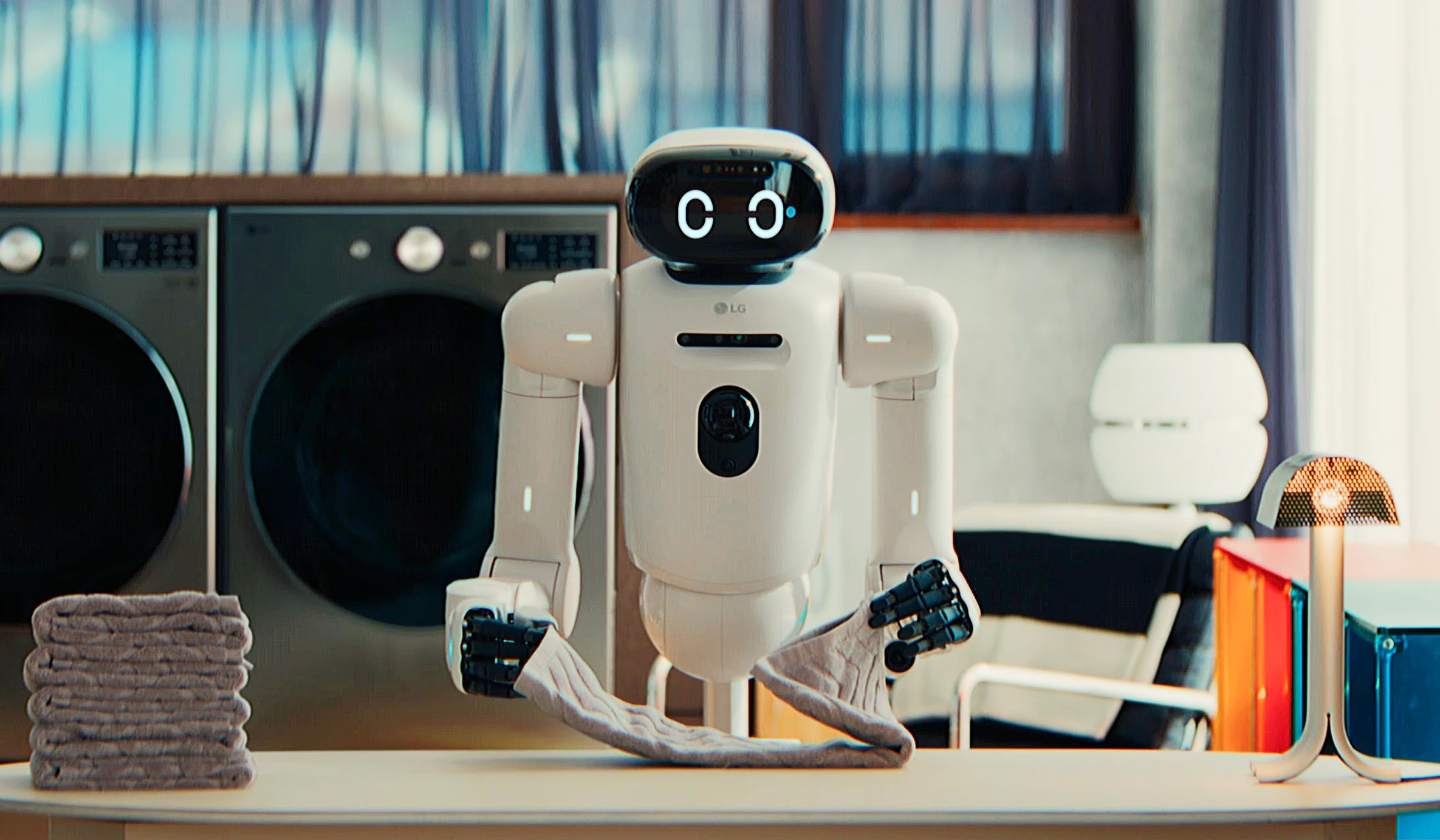
At CES 2026 in Las Vegas this week, LG introduced CLOiD, an AI-powered household robot designed to unload dishwashers, fold laundry, and interact with other smart devices. The robot’s advanced vision-language models and generative voice control have generated global headlines, making CLOiD a standout example of AI applied to ordinary home life.
This intersection of robotics, AI vision systems, and natural language interpretation has energized discussions about the future of AI in the home.
It exploded this week due to its debut at the major CES 2026 tech expo, showcasing practical real-world capabilities that captured widespread media attention and went viral across social platforms.
10. Lenovo Qira — Personal AI Voice Assistant Emerges as a “Digital Twin”
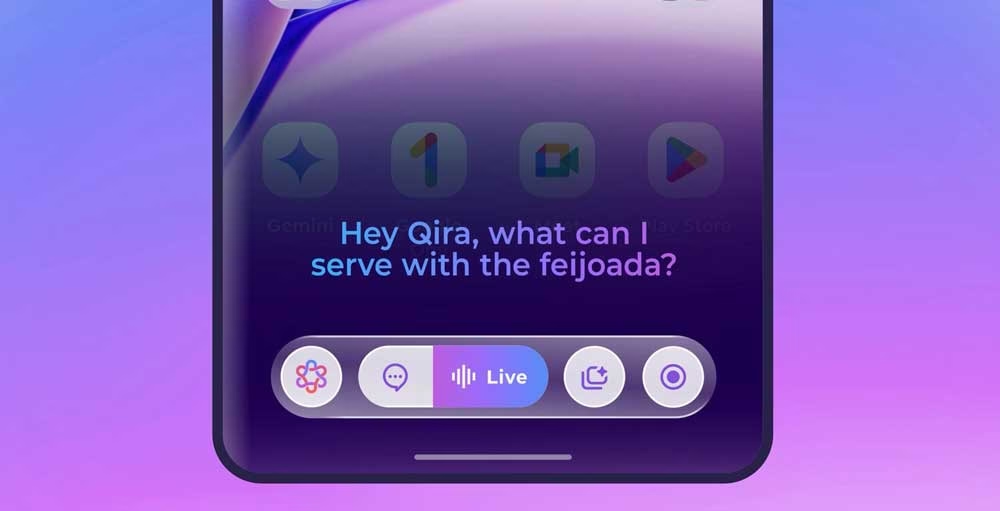
Also debuting at CES 2026 was Lenovo’s Qira, an AI voice assistant that learns user habits and preferences with hybrid cloud and on-device processing. Qira aims to function as a personal AI “superagent”, combining natural language, voice, and multi-input intelligence across devices in Lenovo’s ecosystem.
This announcement has sparked interest not only because of the assistant’s broad feature set but also because it signals the maturation of consumer AI assistants far beyond simple voice control.
It exploded this week due to Lenovo’s major entry into the AI assistant market, its promise of deeper personalization for users, and the strong media coverage it received at CES 2026.
Conclusion
This week in AI has demonstrated once again how fast innovation can accelerate — from groundbreaking language models and autonomous coding agents to robotic home helpers and AI-powered browsers. Each of these top 10 AI tools that exploded this week has not only captured headlines but also shown tangible signs of lasting impact.
Whether you’re a developer, content creator, business leader, or tech enthusiast, understanding these trends is crucial to staying ahead in a world where AI tools evolve faster than ever before.
To stay updated with the latest in AI trends, product launches, and technological breakthroughs, bookmark this page and check back regularly for new insights.
Click here to read more trending TECH News.