Introduction
Generative artificial intelligence (AI) has rapidly evolved from experimental research to a defining technology of the decade. Since the widespread public attention around ChatGPT in late 2022, generative AI models have entered nearly every sector—from creative industries to enterprise automation, and from scientific research to healthcare.
Today’s most advanced generative AI systems are not only more capable; they are fundamentally reshaping how humans interact with computers, automate work, and create content. As we enter 2026, several key developments are driving this transformation, each with broad implications for users, developers, and businesses alike.
This article explores the top 10 developments in generative AI models, contextualized by recent advancements, market momentum, and ongoing innovation.
1. Next-Generation Large Language Models (LLMs)
Perhaps the most visible face of generative AI is large language models (LLMs), and 2025–2026 marked a major leap in scale, sophistication, and capability.
OpenAI’s GPT-5.2 Series
In December 2025, OpenAI officially released GPT-5.2, its latest flagship generative AI model family. GPT-5.2 includes distinct modes designed for instant responses and deep reasoning—offering users the flexibility to switch between rapid output and more thoughtful, contextually rich responses.
This release signifies not only incremental improvement over GPT-5, but also tighter competition with rival models and an emphasis on multimodal comprehension and reasoning.
Google Gemini 3 Advancements
Across the competitive landscape, Google’s Gemini 3 family has been reported to outperform peers on key reasoning and benchmark tests. Google extended multimodal capabilities—including enhanced audio and vision processing—and introduced native thinking modes that improve complex problem solving beyond simple prompt response. These developments accelerated OpenAI’s model iteration cycle, driving faster innovation.
Alibaba’s Qwen3 Expansion
China’s AI development has continued aggressively with the Qwen3 family of models. These models support large context windows, multimodal inputs (text, image, audio, video), and open-source availability for developers—making them powerful alternatives in global AI ecosystems.
This means that generative AI is now capable of supporting deeper, more natural, and human-like interactions, enabling users to engage in conversations that feel more intuitive and context-aware than ever before. For enterprises, it opens the door to adopting advanced models that approach human-level reasoning, making them suitable for managing complex workflows, decision-making processes, and strategic operations. At the same time, developers benefit from access to scalable multimodal platforms that seamlessly integrate text, image, and audio capabilities, allowing them to build more sophisticated, flexible, and future-ready applications.
2. Emergence of Text-to-Video AI Models
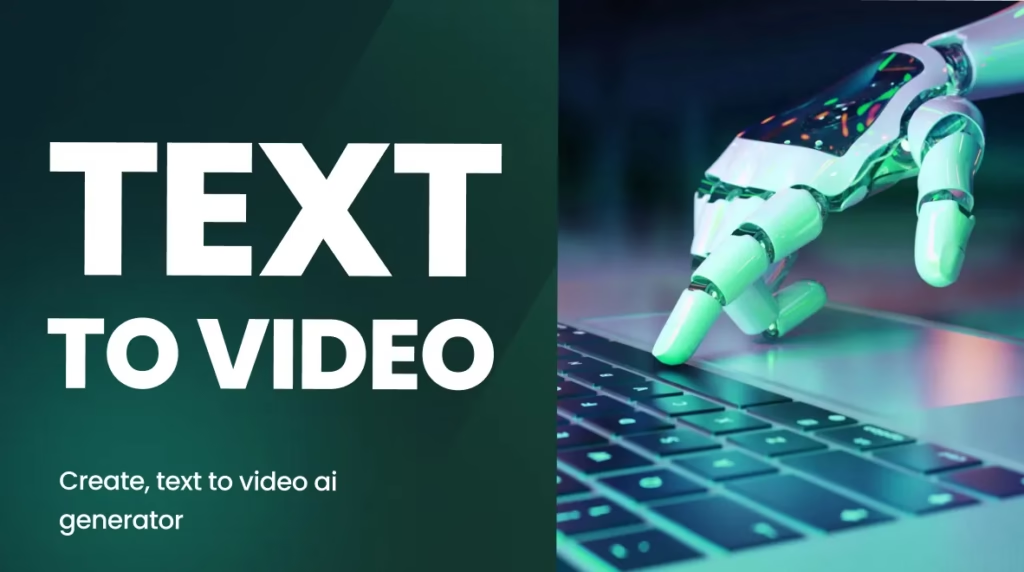
One of the most exciting frontiers in generative AI is text-to-video modeling. Historically, creating coherent video content from text prompts was limited by hardware and model complexity. However, recent innovations have changed that.
Google DeepMind’s Veo Series
The Veo model family from Google DeepMind enables the generation of full-motion video from textual prompts. Latest versions—including Veo 3.1—produce high-resolution video content and even generate accompanying audio tracks, bridging a long-standing gap between static image generation and dynamic video output.
The impact is significant across creative and commercial sectors, as creators and filmmakers can now produce preliminary visuals at a fraction of the traditional cost and within substantially shorter production timelines. Marketing teams gain the ability to rapidly prototype advertisements and campaign visuals without relying on conventional video editing tools, accelerating ideation and iteration cycles. Meanwhile, the entertainment and gaming industries can integrate AI-generated cutscenes and storyboarding aids into their workflows, enhancing creative experimentation while reducing development overhead.
Transitioning the World of AI Content
Text-to-video moves generative AI beyond text and images, enabling narrative media creation without human video production expertise for the very first time.
3. Multimodal AI Becomes Standard
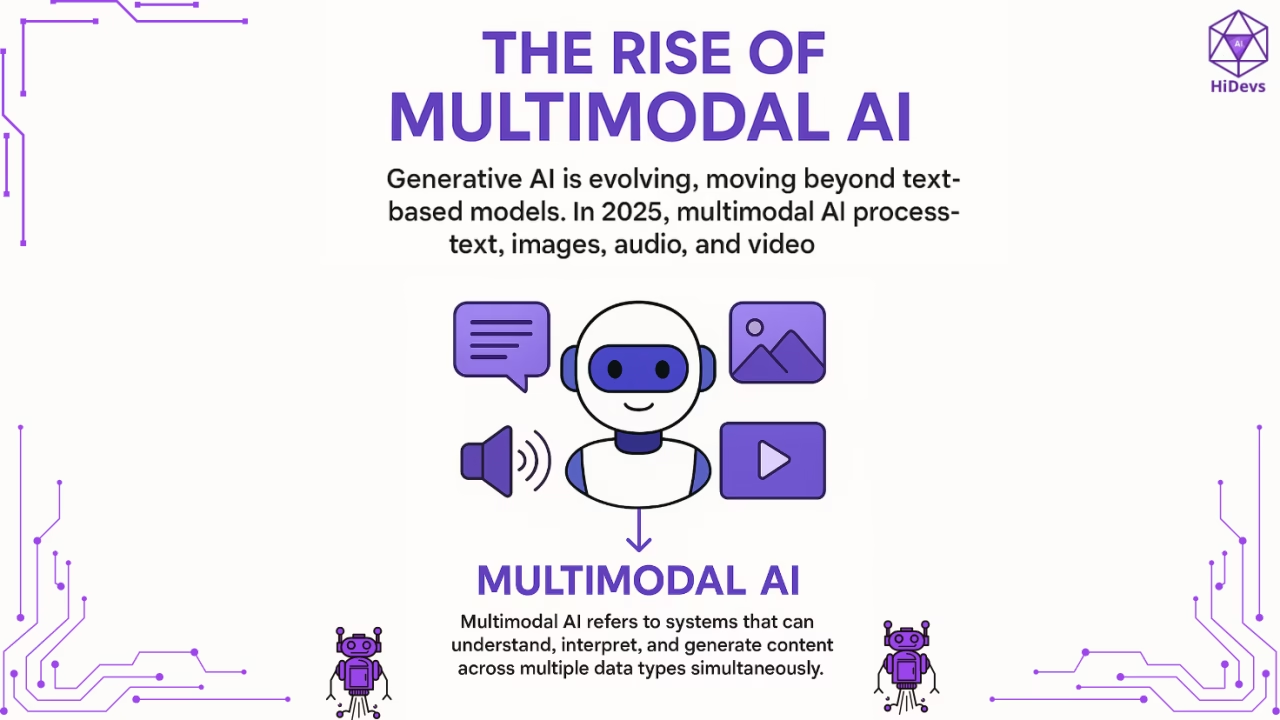
While early generative AI focused largely on text (LLMs) or static images, multimodal models—those capable of integrating text, visuals, audio, and more—are now the industry default.
Multimodal AI systems are designed to understand and generate across multiple data types at the same time, allowing for seamless context switching within a single prompt. For example, a single concept description can produce detailed written explanations, complementary visual illustrations, and synthesized audio narration in one unified response. Additionally, these systems can analyze and respond to questions about uploaded documents, videos, and images within the same conversational flow, creating a more cohesive, efficient, and human-like interaction experience.
This shift is reinforced by multiple industry forecasts projecting widespread adoption of multimodal generative systems at scale beginning in 2026 and continuing beyond, as organizations increasingly prioritize AI that can operate across multiple content formats simultaneously. In practical terms, this enables use cases such as generating product pitches that seamlessly combine persuasive text with promotional visuals, delivering dynamic customer support responses that incorporate annotated screenshots or instructional videos, and synthesizing audio commentary to enhance educational and training materials, all within a single, cohesive AI-driven workflow.
4. Rise of Autonomous AI Agents
The concept of AI agents—models that do more than answer prompts but execute complex workflows—is one of the most disruptive developments of this era.
From Chatbots to Action Takers
As generative AI continues to evolve, new systems are increasingly being designed to operate as autonomous digital workers capable of executing tasks with minimal human intervention. These systems can read, interpret, and act on data across multiple software tools, allowing them to navigate complex digital environments seamlessly. They are also able to perform multi-step tasks—such as booking travel, scheduling meetings, and generating reports—while integrating directly with enterprise software platforms to reduce manual effort, streamline operations, and significantly lower decision-making latency.
Agents are already embedded within major platforms such as Microsoft Copilot, Salesforce AI, and similar enterprise systems, signaling a fundamental shift in how artificial intelligence is applied in practice. Rather than merely assisting users, these AI agents are increasingly designed to take initiative, execute tasks, and directly generate measurable outcomes across business functions. Looking ahead, industry forecasts indicate that agent-driven AI will account for billions of dollars in enterprise value creation by the end of the decade, underscoring their growing strategic importance in organizational operations and decision-making.
5. Lightweight and On-Device Models
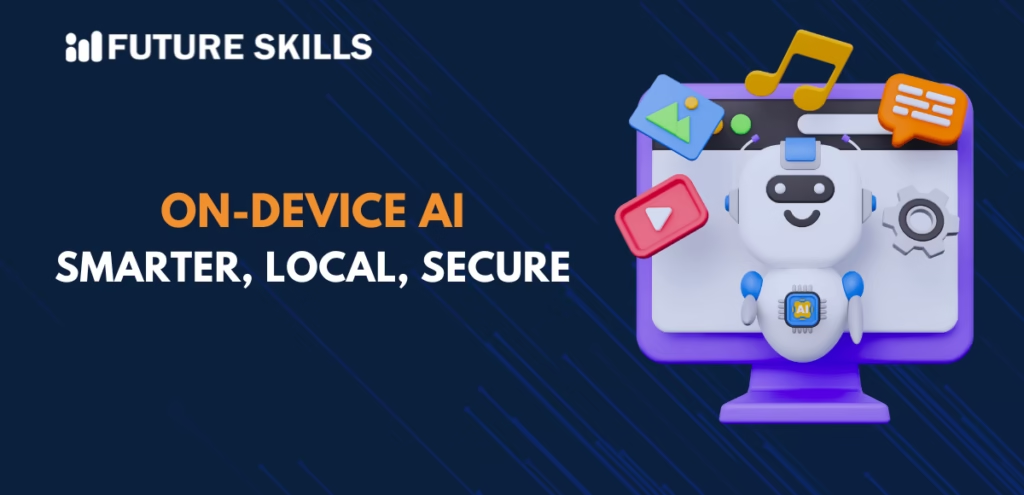
Historically, the most capable AI models required powerful cloud infrastructure. Today, however, lightweight models that run directly on end-user devices are becoming feasible.
The benefits of on-device AI are particularly compelling for both users and organizations, beginning with enhanced privacy, as data is processed directly on the device rather than transmitted to external servers, thereby strengthening security and reducing exposure risks. In addition, local inference significantly improves speed by eliminating network latency, enabling real-time responses and smoother user experiences. From a business perspective, on-device AI also delivers cost efficiency by reducing reliance on cloud infrastructure and lowering ongoing compute and data transfer expenses.
This shift is accelerating as optimization techniques such as quantization, pruning, and neural compression are increasingly applied to generative models, making advanced AI capabilities more efficient and accessible. Consequently, powerful generative features are now becoming available on consumer hardware, including mobile phones and laptops, enabling broader adoption and real-time interaction. This expansion supports a range of practical use cases, from real-time voice assistants for enterprise teams and on-device text summarization for sensitive legal documents, to augmented reality applications that deliver instant generative overlays, enhancing both productivity and user experience.
6. Open Source Models and Democratization
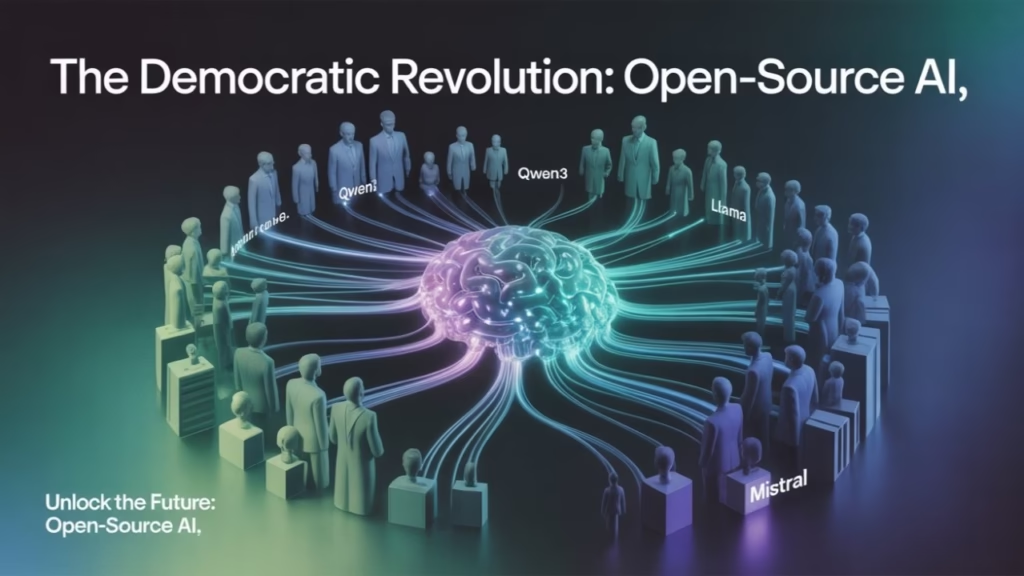
The once-proprietary domain of generative AI is undergoing democratization through open-source models.
The growth of open-source AI models is accelerating, with platforms like Qwen from Alibaba and the Mistral series leading the way. These models provide flexible licensing options that enable seamless integration into commercial products, making them highly accessible for businesses and developers alike. They benefit from large, active communities of contributors who continuously enhance model performance and functionality, while offering fine-tuning capabilities that allow customization for specific tasks, workflows, or industry requirements. This combination of openness, adaptability, and community support is driving widespread adoption and innovation in the AI ecosystem.
For example, Mistral’s recent releases include reasoning models and efficient variants that rival proprietary counterparts in performance and flexibility.
This matters because open-source AI empowers innovation by giving startups, researchers, and academic teams the ability to develop customized AI systems without the constraints of high costs or dependence on specific vendors. By removing these barriers, open-source frameworks foster experimentation, accelerate technological advancement, and democratize access to cutting-edge AI capabilities, enabling a broader range of organizations to contribute to and benefit from the evolving AI ecosystem.
7. Enterprise Adoption and RAG Workflows
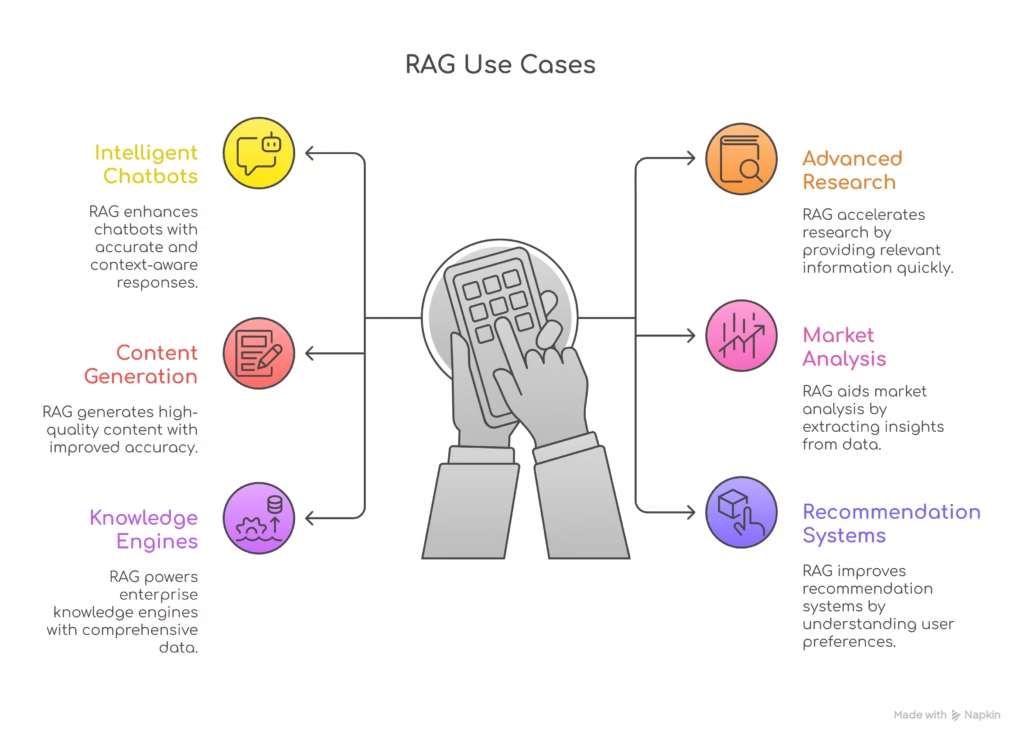
Generative AI models on their own are powerful, but when paired with Retrieval-Augmented Generation (RAG) techniques, they become trusted enterprise tools.
RAG, or Retrieval-Augmented Generation, works by leveraging external document stores—such as knowledge bases or customer data—to ground the AI’s responses in factual information. This approach significantly reduces the risk of hallucinations and enhances the reliability of outputs, making it especially valuable for business applications where accuracy is critical. Reflecting its growing importance, recent market data indicates that a majority of Fortune 500 companies have already integrated RAG pipelines into their AI deployments, underscoring its role as a standard practice in enterprise AI strategies.
The benefits of these advanced AI systems are particularly pronounced in high-stakes domains such as legal, financial, and medical sectors, where higher accuracy can significantly reduce errors and improve outcomes. Enterprises also gain better compliance with governance and regulatory standards, ensuring that AI-driven processes align with internal policies and external requirements. Additionally, these systems provide enhanced audit trails for AI-generated decisions, increasing transparency, accountability, and trust in automated workflows.
8. Ethical AI, Governance, and Regulation

As generative AI becomes more capable, governance issues have taken center stage.
Industry and government attention on AI is increasingly focused on ensuring responsible and ethical deployment, emphasizing algorithmic fairness, transparency, and safety. Regulators and companies are actively developing frameworks to govern AI use, such as China’s AI registry, which tracks generative tools and enforces safety standards, while international organizations are proposing guidelines that require explainability and risk mitigation. Central themes in these efforts include mitigating bias, protecting data privacy, and ensuring accountability for generative outputs, reflecting a global push to balance innovation with ethical responsibility.
These efforts are essential to maintain trust in AI systems and prevent misuse.
9. Creative and Entertainment Impacts
Generative AI’s influence on creative professions is profound.
Reports show that a substantial majority of creators, particularly in markets such as India, view generative AI as a major catalyst for growth in their work. This technology is enabling a wide range of creative applications, including AI-assisted music composition and scriptwriting, automated storyboarding and the creation of visual concept art, as well as the development of dynamic gaming content and character generation. By streamlining these processes, generative AI is not only accelerating production timelines but also expanding the creative possibilities available to artists and developers alike.
At the same time, ethical and quality debates continue as audiences critique overuse of generative tools in high-profile media, highlighting the balance needed between automation and artistic integrity.
10. Market Expansion and Economic Impact

Beyond technical breakthroughs, generative AI is driving massive market growth.
Industry estimates project the global generative AI market to grow from under USD 50 billion in 2024 to orders of magnitude larger by 2035.
This expansion is driven by multiple factors shaping the AI landscape. Widespread enterprise AI deployment across diverse sectors has accelerated adoption, enabling organizations to integrate intelligent systems into core operations. At the same time, the launch of innovative consumer AI products is broadening accessibility and driving everyday use cases. Specialized vertical models tailored to specific industries provide targeted solutions that enhance efficiency and decision-making, while AI-enabled automation platforms streamline workflows and reduce manual intervention, collectively fueling rapid growth and transformative impact across markets.
Conclusion
The developments listed above represent both cutting-edge breakthroughs and foundational shifts in how generative AI models are developed, deployed, and integrated into human workflows.
As we progress through 2026, AI models are expected to become increasingly autonomous and capable, performing more complex tasks with minimal human intervention. Their integration into business processes will deepen, streamlining operations, decision-making, and customer interactions across industries. At the same time, ethical governance will play a critical role in shaping public trust, ensuring that AI is deployed responsibly and transparently. This evolution will also transform creativity and content creation, enabling a seamless blend of human and machine inputs that enhances innovation while expanding the possibilities of collaborative production.
The coming years will not only continue to expand AI capabilities but also redefine what it means to collaborate with artificial intelligence.
Read the latest trending tech news here.