Introduction
Tennis in 2025 has been nothing short of dramatic. Beyond the breathtaking rallies and record-breaking performances, the sport has been defined by controversies that sparked debate across courts worldwide. From doping scandals to heated on-court exchanges, technological glitches, and debates over player safety, these moments have captivated fans and challenged the norms of professional tennis. In this article, we explore the Top 10 Tennis Controversies You Need to Know in 2025 that left a lasting mark on the sport.
1. Jannik Sinner’s Doping Case and Suspension

Perhaps the most discussed issue in 2025 was the doping case involving world No. 1 Jannik Sinner. Early in the year, Sinner accepted a three-month suspension after a positive test for the banned substance clostebol—a steroid—was traced to his support team’s negligence. The World Anti-Doping Agency (WADA) and the International Tennis Integrity Agency (ITIA) reached a resolution, resulting in his exclusion from competition from 9 February to 4 May 2025. The outcome provoked controversy for several reasons: some players and commentators argued that elite athletes may receive preferential treatment and quicker legal remedies, leading to accusations of inconsistency, while Novak Djokovic and others publicly questioned the fairness of the process, describing it as favoring marquee names. Despite missing the clay-court season and key lead-in tournaments, Sinner returned in May and later reached major finals, further intensifying debate over competitive fairness.
This controversy spotlighted systemic issues in anti‑doping governance, leading to calls for clearer standards, greater transparency, and equal treatment of athletes across the ranking spectrum.
2. US Open Clash: Taylor Townsend vs. Jelena Ostapenko
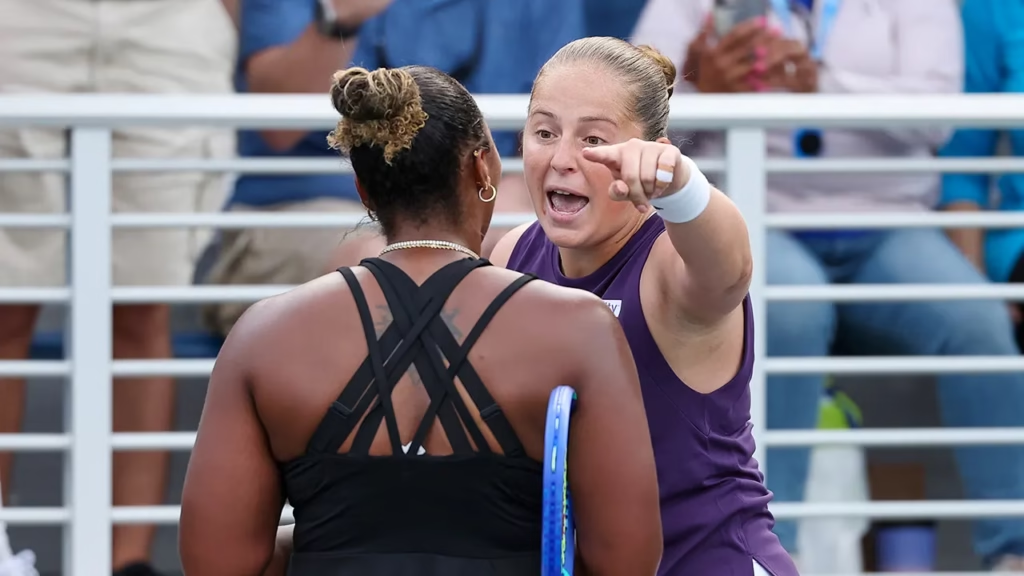
During the 2025 US Open, an emotional exchange overshadowed competitive tennis when Jelena Ostapenko accused Taylor Townsend of having “no class” and “no education” after Townsend won their match. The comments were widely deemed unprofessional and sparked accusations including potential racial undertones, drawing boos from fans and widespread media coverage.
Ostapenko initially refused to apologize but later issued a formal statement on social media acknowledging the harm her words had caused.
This incident became a focal point in discussions about sportsmanship, respect among athletes, and the broader issue of how language and conduct are interpreted within and outside the sport
3. Wimbledon’s Automated Line‑Calling System Fiasco
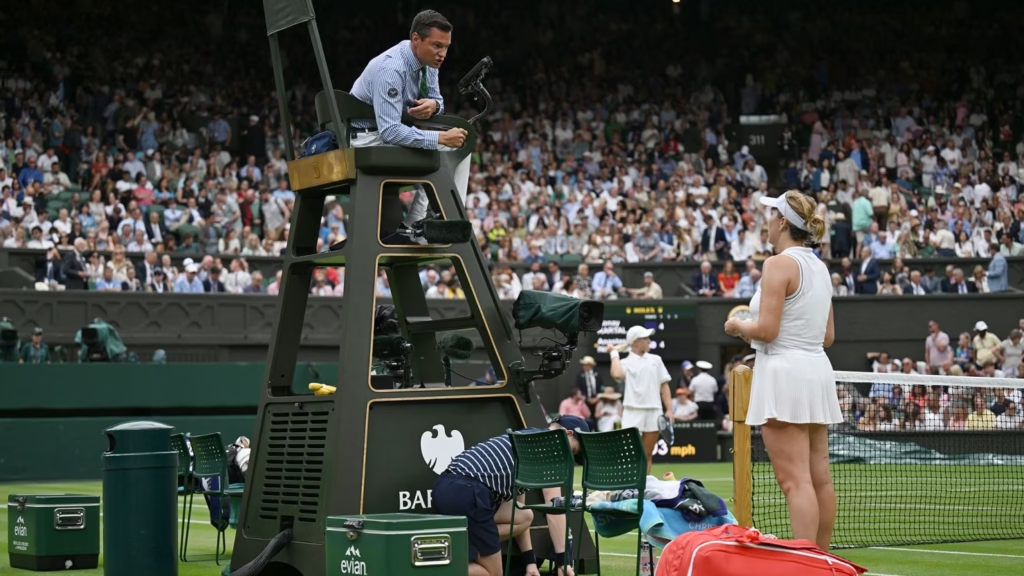
In a high‑profile Wimbledon match between Anastasia Pavlyuchenkova and Sonay Kartal, automated electronic line‑calling technology malfunctioned at a crucial moment, failing to flag an out ball and ultimately leading to a replayed point. The system’s failure prompted severe backlash from players and competitors, with Pavlyuchenkova publicly saying a game had been “stolen” due to technological error.
Although organizers apologized and made adjustments later, this moment marked the first major controversy of fully automated officiating at a Grand Slam.
This incident raised questions about the reliability of replacing human line judges with automated systems and ignited a broader conversation about the integration of technology in officiating
4. Medvedev’s US Open Meltdown and Crowd Altercation
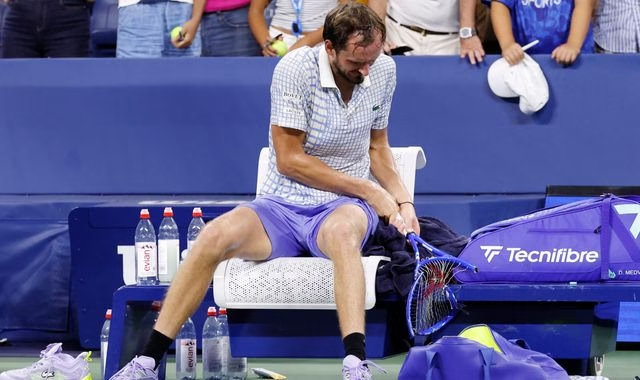
At the same US Open, Daniil Medvedev was involved in a dramatic controversy during his first‑round encounter with Benjamin Bonzi. When a photographer inadvertently entered the court and caused an interruption, the ensuing decision by chair umpire Greg Allensworth led to a heated outburst from Medvedev. He confronted the umpire, questioning him with the now‑viral phrase “are you a man?” and encouraged the crowd to boo the ruling.
The match was delayed, and Medvedev’s behavior sparked critical discussion about on‑court conduct.
This episode became emblematic of the pressures associated with high‑stakes tennis, the role of officials, and the ever‑increasing impact of crowd dynamics on player reactions
5. “Messy Handshakes” and On‑Court Etiquette Breakdown
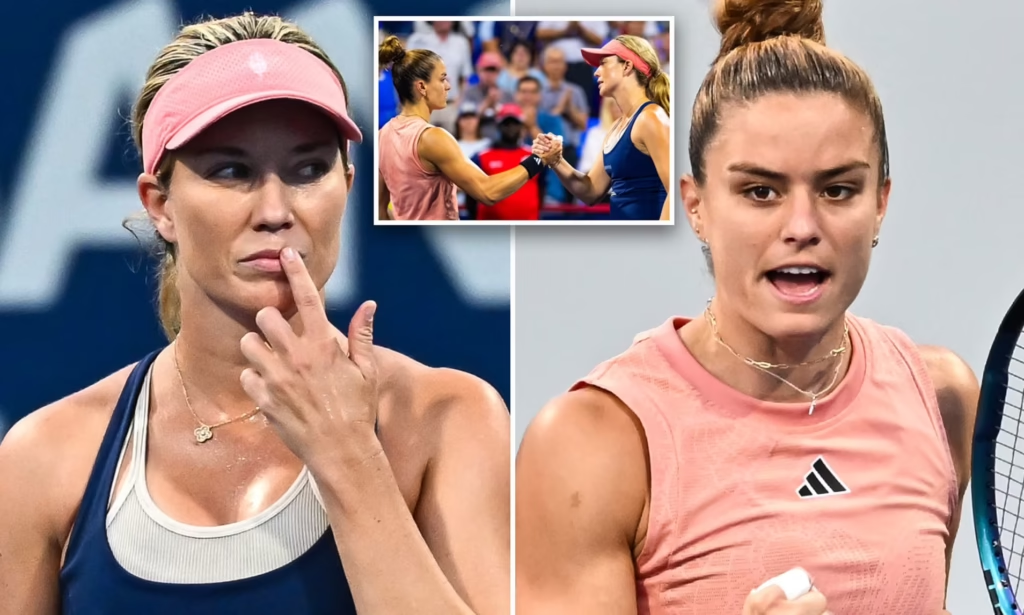
Across the 2025 season, several high-profile post-match exchanges—ranging from botched handshakes and cold shoulders to sarcastic bows—captured as viral moments, revealed a growing trend in tennis: traditional etiquette increasingly giving way to public displays of emotion. Players such as Danielle Collins, Maria Sakkari, and others were involved in incidents that were widely shared and debated online, including icy interactions between Collins and Iga Swiatek, as well as heated exchanges beyond the net involving other rivals.
These moments underlined far‑reaching conversations about rivalry, respect, media attention, and the emotional toll of competition in the digital age.
6. Frances Tiafoe’s Roland Garros Controversy
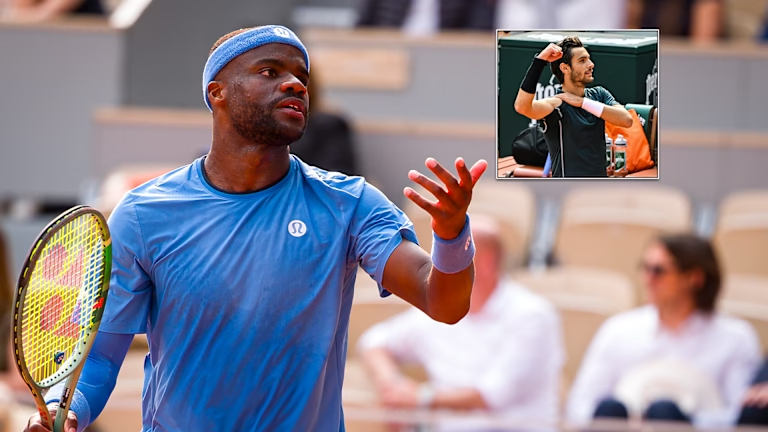
At the French Open, fan favorite Frances Tiafoe found himself in a spotlight for reasons beyond tennis. After a match against Lorenzo Musetti, Tiafoe criticized perceived inconsistency in how player conduct incidents were handled, referencing past controversies—especially in the context of disciplinary decisions.
His remarks resonated with many because they fed into broader debates about officiating, discipline, and whether top players receive uneven treatment.
This controversy proved enduring, not because of what Tiafoe did on the court, but because his critique tapped into recurring discussions about fairness and accountability
7. Professional Tennis Players Association Lawsuits
Amid the season’s drama, legal action from top and lower‑rank professionals made global headlines. The Professional Tennis Players Association (PTPA) and dozens of players filed lawsuits against the ATP, WTA, International Tennis Federation (ITF), and International Tennis Integrity Agency (ITIA). They alleged anticompetitive practices, monopolistic control, and systemic unfairness in tour governance and economic structures.
These legal challenges represented systemic friction between athletes and the sport’s governing bodies and could lead to significant long‑term structural changes if successful
8. Harassment and Security Concerns on Tour
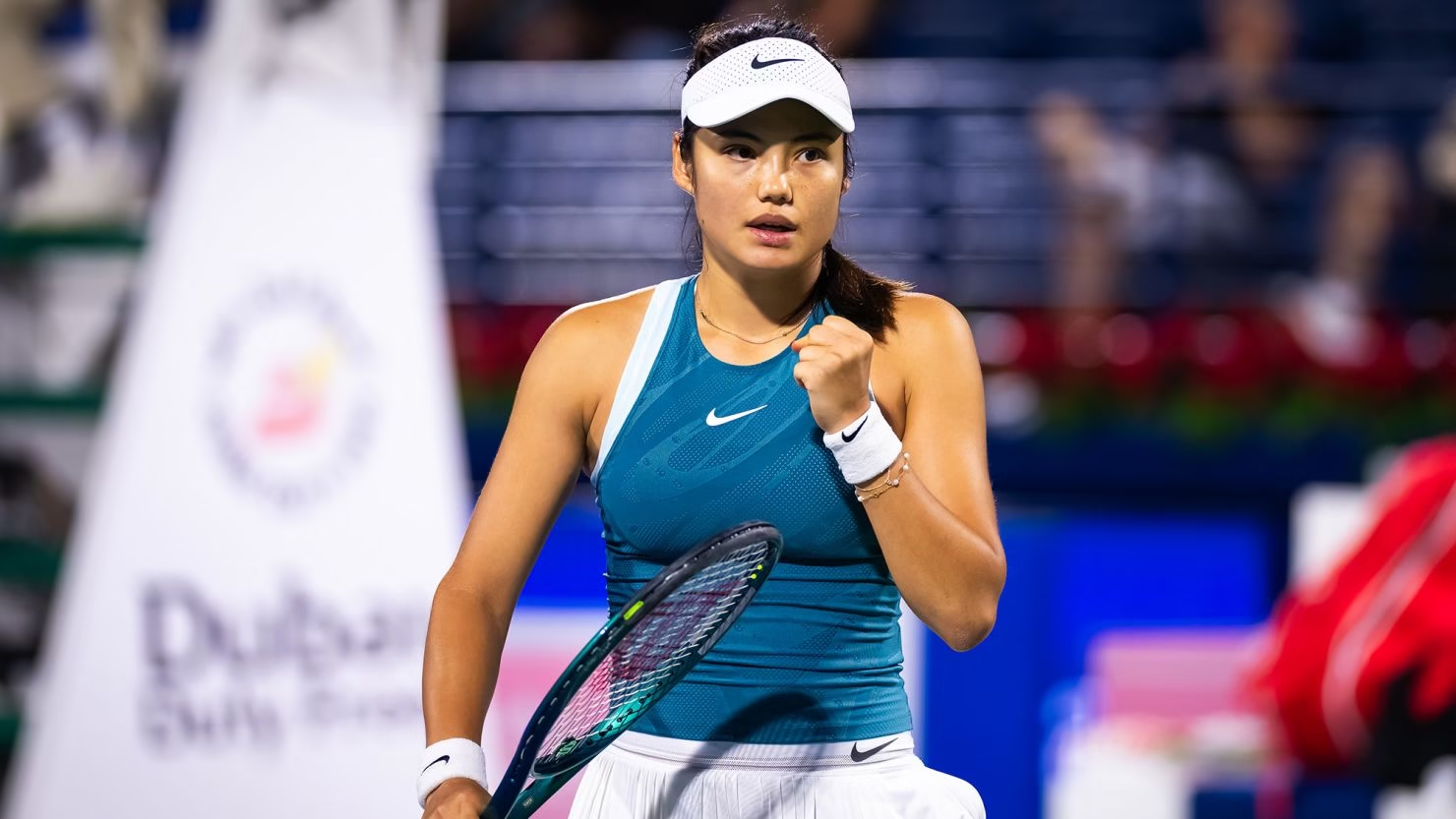
The year also saw troubling moments related to player safety. The tennis community was shaken when Emma Raducanu visibly broke down due to a perceived stalker incident during a match in Dubai, prompting discussions around fan behaviour, security protocols, and how tournaments protect player wellbeing.
Safety controversies forced organizers to reassess on‑site procedures and how threats to athletes—whether perceived or real—are managed.
9. Medical Timeouts and Questions of Gamesmanship
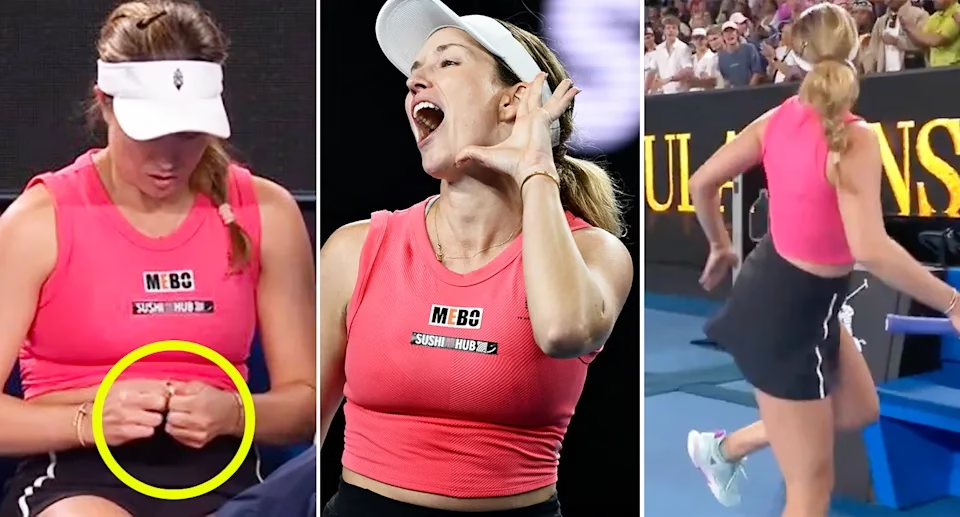
In the early season, Danielle Collins drew criticism for a controversial medical timeout taken at the Australian Open, which many observers interpreted as strategic gamesmanship. Collins’ actions occurred at a critical juncture when her opponent was serving for a set, suggesting that the timeout could have disrupted rhythm and momentum.
This debate reopened broader questions about the legitimacy and boundaries of medical timeouts, player health, and strategic behavior in competition.
10. Heat‑Related Player Health Debates and Policy Shifts
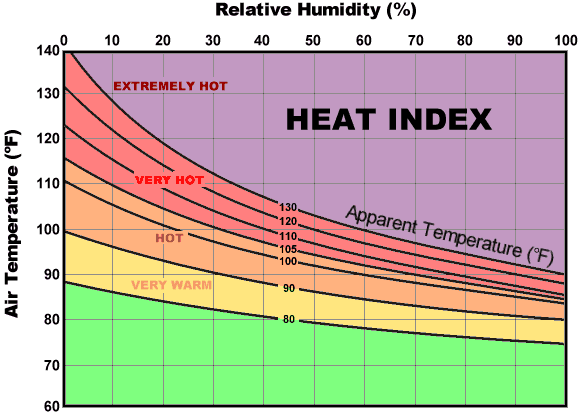
Though not a single isolated moment, heat‑related retirements and health struggles at events like the Shanghai Masters led the ATP to adopt a new extreme‑heat policy for 2026 and beyond, allowing structured breaks based on the Wet Bulb Globe Temperature Index.
This change came after several players—including top names—struggled visibly with severe conditions, prompting debate about whether traditional match scheduling and policies adequately protect athlete health.
Controversies over athlete safety during extreme weather catalyzed meaningful governance changes, reflecting a sport grappling with player wellbeing amid climate challenges.
Conclusion: A Year of Change and Controversy
The 2025 tennis season proved that the sport is about far more than just athletic excellence. Controversies—from doping scandals and on-court outbursts to technological glitches and safety concerns—shaped the narrative, sparking debates that extended well beyond the courts. These moments highlighted the pressures athletes face, the evolving role of technology and officiating, and the ongoing need for fairness and player protection. As tennis moves forward, the lessons of this year’s controversies will likely influence governance, etiquette, and competition, ensuring that 2025 is remembered not only for its thrilling matches but also for the conversations it ignited within the sport.
Read more trending SPORTS news here.