Introduction
World Travel Market (WTM) London 2025 again set the industry agenda — and this year the conversation was shaped by a powerful mix of technology, sustainability, and a return to slow, meaningful travel experiences. What was observed at ExCeL London was not only a trade show; it was a snapshot of a sector being reimagined in real time. This article will explore the top 10 travel trends highlighted at WTM 2025, explain why each trend matters, give examples and data that support the shift, and suggest practical actions travel brands can take now. Each major claim that relies on recent reporting or WTM’s own outputs is cited to the original coverage so you can follow up.
1 — Artificial Intelligence: augmentation, not replacement

AI dominated conversations across tracks: travel tech panels, exhibitor booths and the WTM Trends Report highlighted how AI is being used to personalize offers, optimize revenue management, and plan travel experiences that reduce crowding. Attendees were shown case studies where AI-driven recommendations were being used to steer travelers to less-crowded times and sites, improving satisfaction while mitigating over tourism pressures.
AI has moved quickly from experimental pilots into revenue-generating applications. For example, survey data presented at WTM suggested that a substantial portion of travelers expect AI to help them avoid crowded destinations and to receive smarter recommendations — which in turn raises average spend and conversion when done well. AI is being adopted across the distribution chain: search, meta-ranking, channel management, guest personalization, and post-booking experiences.
2 — Sustainability: measurable targets and real investment
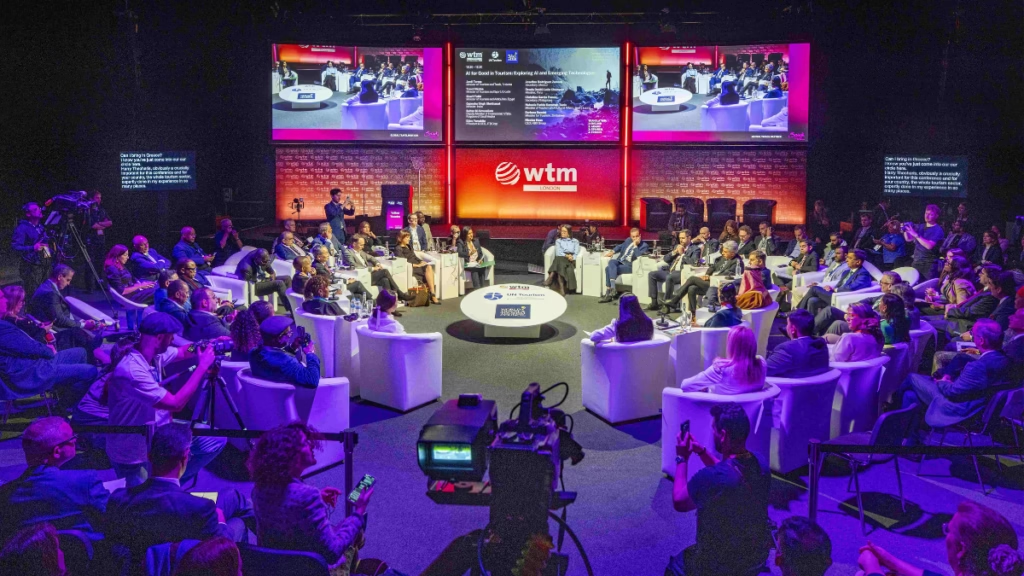
Sustainability sessions were heavily attended and a number of destinations and companies showcased measurable commitments — not just mission statements. WTM’s programming and the Sustainability Summit were used to push the sector beyond pledges into action planning. Reporting from WTM showed sustainability shifting from optional to mainstream priority for a large majority of travelers and industry buyers.
Sustainability is now commercialized: consumers increasingly seek brands with verifiable environmental and social credentials. Investors and distribution partners (including large OTAs) are integrating sustainability into procurement and promotional decisions. Consequently, businesses with measurable policies, credible reporting, and product features that reduce environmental impact are being favored.
WTM’s content and exhibitor activations made clear that sustainability is no longer a niche conversation — it is a buying criterion across trade partners.
3 — Slow travel & deep cultural immersion
At WTM 2025 slow travel was championed as an antidote to superficial, checklist tourism. Panels and destination showcases emphasized longer stays, regional itineraries, and curated cultural exchange programs. Many destinations promoted off-peak, off-path routes to traders and buyers.
As capacity constraints and visitor fatigue become more widespread, travelers are seeking deeper, more meaningful experiences that allow local economies to benefit beyond the usual hotspots. Slow travel reduces stress on over toured assets, increases per-visitor local spend (because travelers are in-market longer), and supports more equitable distribution of tourism revenues.
4 — Accessibility and inclusion as business strategy
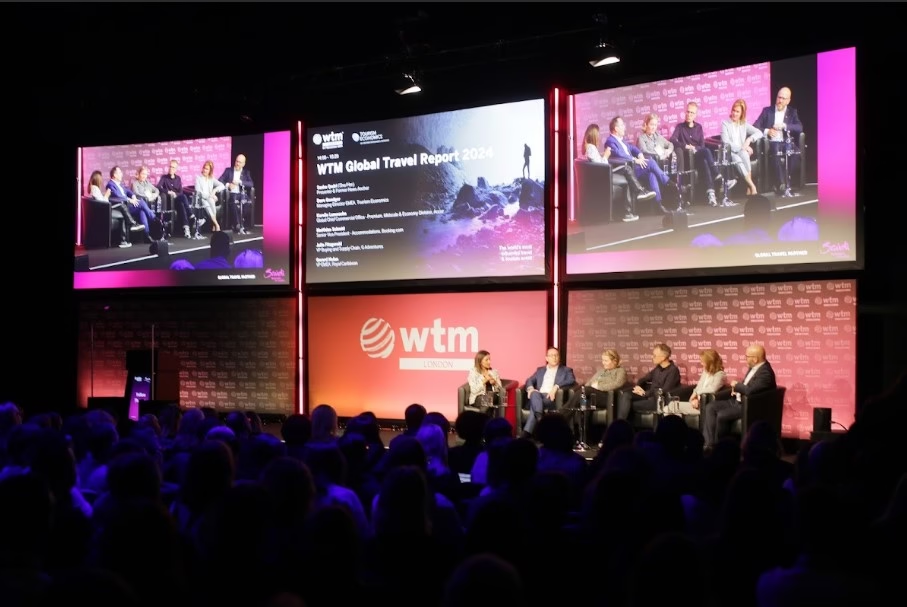
WTM’s conference programming included dedicated sessions on DEAI (diversity, equity, accessibility and inclusion), and numerous exhibitors showcased accessible product lines. Accessibility was framed not only as compliance, but as a market opportunity and guest experience differentiator.
Accessible travel expands addressable markets (travelers with mobility, sensory, or neurodiverse needs) and improves brand reputation. Importantly, accessible design often lifts experiences for all travelers (clear signage, quieter spaces, flexible booking options).
5 — Bleisure, ‘gig tripping’ and flexible work travel

Labor and lifestyle changes continued to be factored into travel product design. Emerging models like “gig tripping” — where people combine short-term work assignments with travel — were discussed alongside the long-term rise in bleisure travel and relocations. Destination marketing organizations (DMOs) pitched longer-stay amenity packages to attract remote workers and flexible travelers.
When work and travel blur, trip length and spend patterns change: stays become longer, demand for work-conducive amenities increases, and mid-week occupancy patterns shift. Suppliers that quickly adapt to these preferences — by offering co-working, local SIM or e-sim partnerships, and work-friendly retreats — will benefit.
6 — Data privacy and ethical personalization

As AI and personalization scale up, privacy and the ethics of algorithmic recommendations became a recurring topic. Panels emphasized consent-driven personalization and the importance of clear traveler controls. Many travel-tech vendors were pitching privacy-focused solutions to reassure both consumers and enterprise partners.
Trust is essential for personalization. Consumers may accept richer individualized offers, but only when transparency and consent are respected. Regulators are also tightening data protection frameworks globally, which will affect cross-border data flows and marketing practices.
7 — Regional aviation and connectivity upgrades

Regional connectivity and last-mile transport improvements were highlighted — governments and private players promoted investments in routes, point-to-point services, and multimodal options that link secondary markets to main tourism hubs. This theme was reinforced by exhibitor announcements and destination pitches focused on spreading growth beyond capitals and big cities.
Improved regional aviation and rail connectivity unlock new itineraries, reduce concentration at principal gateways, and enable more resilient flows in peak seasons. For destinations, better connections equal more distributed revenue and more attractive product packaging.
8 — Experience-led gastronomy and climate-aware food tourism
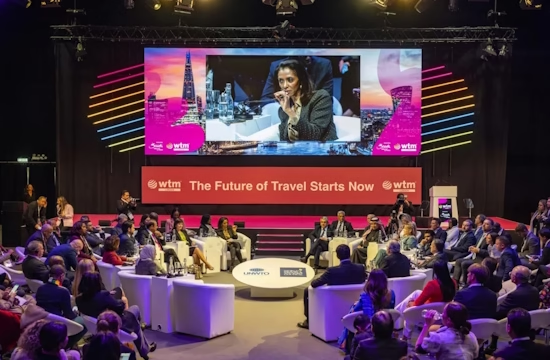
Food and gastronomy tourism sessions picked up traction. Presenters linked culinary experiences to sustainability (local sourcing, seasonal menus) and to deeper cultural exchange. Younger travelers and Gen Alpha’s tastes were highlighted as drivers of innovative foodie travel — notably in immersive and sustainable food experiences.
Food is a high-margin channel for destinations and operators. When packaged as an immersive, place-based story (farm-to-table experiences, culinary classes, market tours), gastronomy tours increase local spend and visitor satisfaction while supporting local producers.
9 — Crisis resilience and risk management baked into product design
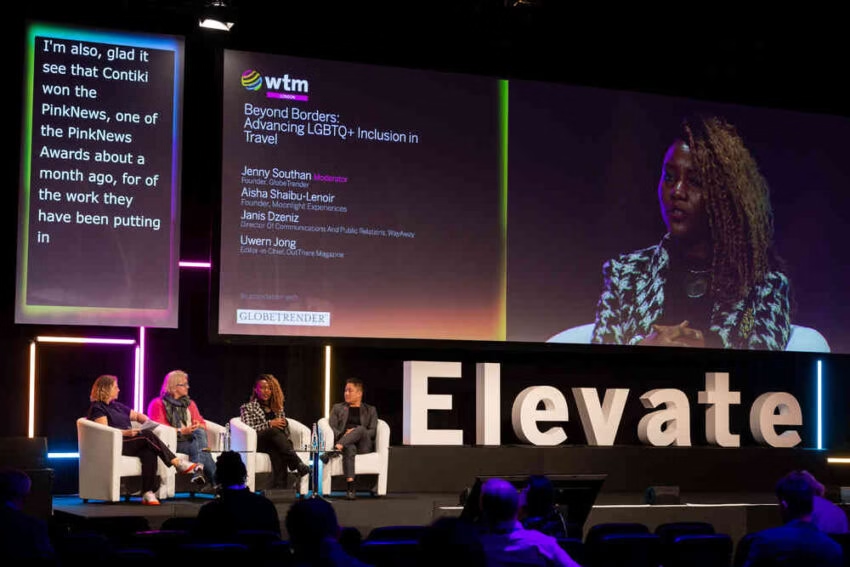
Given ongoing geopolitical uncertainty, climate events and fluctuating regulations, risk management was elevated from an operations topic to a strategic necessity. Panels and buyers insisted on crisis-ready cancellation policies, operational contingency plans, and insurance partnerships.
Travel is inherently exposed to shocks. Brands that can demonstrate robust contingency processes, flexible booking and refund policies, and clear traveler communication will retain trust and reduce revenue leakage during disruptions.
10 — The rise of niche travel verticals and micro-moments
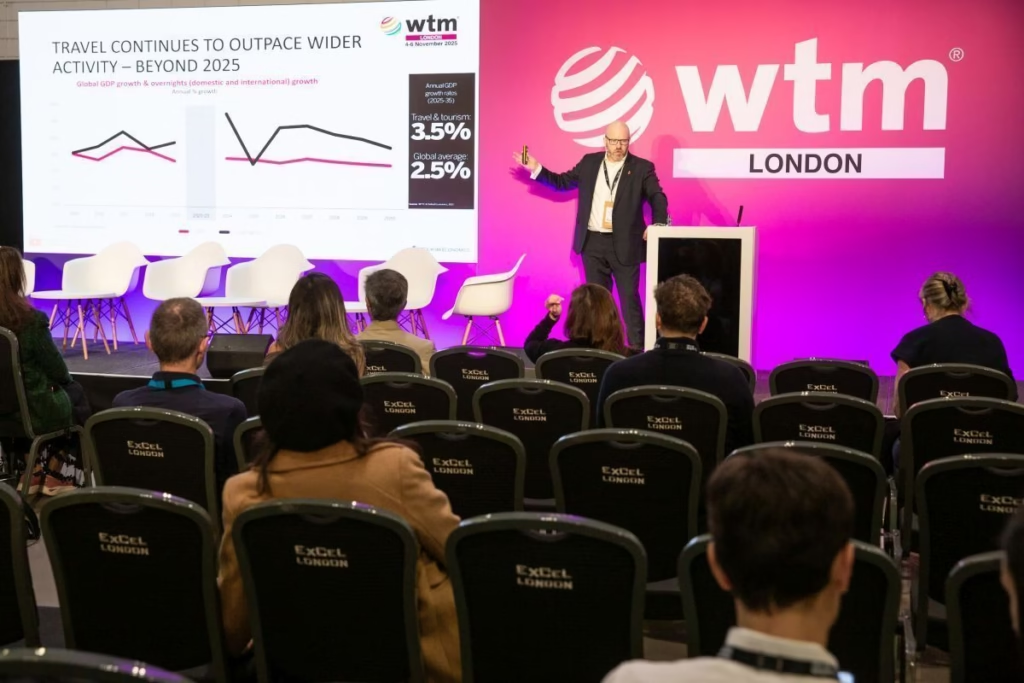
Smaller, hyper-focused travel verticals (astronomy tourism, regenerative travel, craft tourism, and immersive wellbeing retreats) received disproportionate interest from buyers and consumers. The marketplace at WTM and the show’s conference tracks showcased many examples of micro-niche operators scaling through partnerships and smart channeling.
As generalist products become commoditized, niche experiences are where differentiation and higher margins are being found. For marketers, micro-moment content (short-form, intent-driven snippets that match stages of planning) is increasingly effective for capturing demand.
Conclusion
At WTM 2025, it was observed that the travel industry is entering a phase where growth will be accompanied by greater scrutiny and higher expectations. Technology will scale experiences, but it will be judged by purpose — whether AI and data help sustainability, distribute benefits, and protect privacy. Slow and immersive travel will become a durable countertrend to mass sightseeing, and destinations that invest in connectivity, inclusivity, and transparent sustainability will be rewarded.
Crucially, these changes are actionable: the companies and DMOs that were most visible at WTM were those that combined tangible commitments (data, partnerships, product bundles) with strong storytelling. In short, the path forward was not only debated at WTM — it was charted by the projects and pilots shown on the floor.
Click here to read more trending TRAVEL news.