Introduction
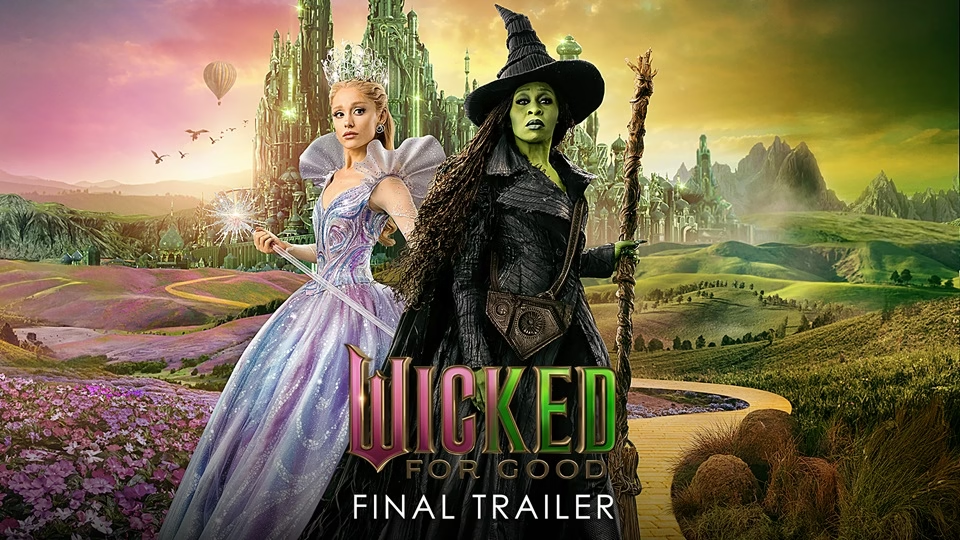
The Wicked: For Good soundtrack has quickly become one of the most anticipated musical releases of the year, blending iconic Broadway classics with powerful new songs written exclusively for the film. Featuring standout performances from Cynthia Erivo, Ariana Grande, and the star-studded cast of Oz, the soundtrack delivers unforgettable vocals, cinematic arrangements, and fresh emotional depth. In this article, we break down the Top 10 songs that define the album—exploring what makes them special, how they elevate the story, and why fans everywhere can’t stop listening.
1. “No Place Like Home” — Cynthia Erivo (Elphaba)
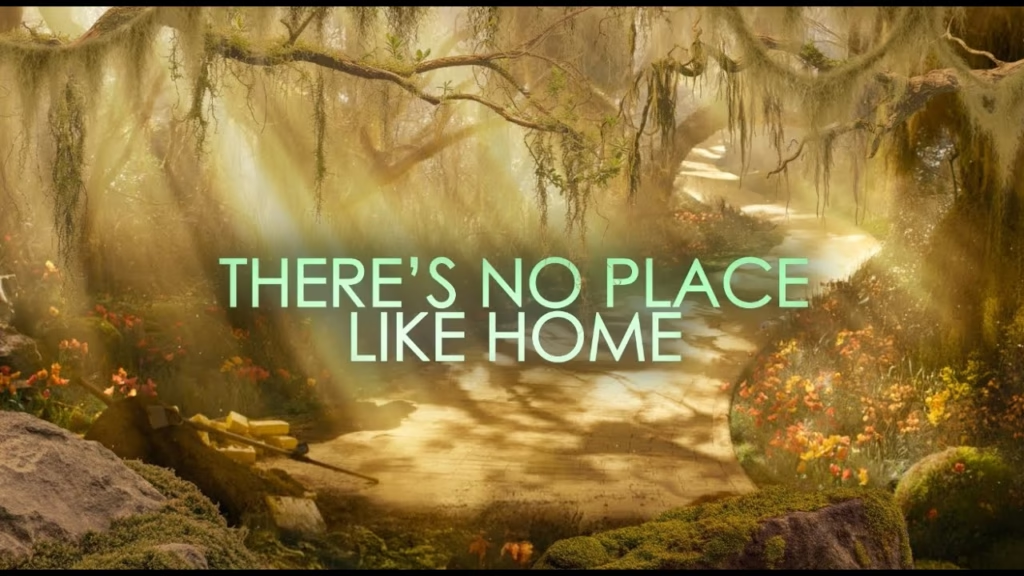
No Place Like Home is one of the two brand-new songs written for Wicked: For Good. Because it is performed by Cynthia Erivo—whose portrayal of Elphaba anchors the entire saga—the song was made to feel like an emotional centerpiece. The number was intended to reveal new interiority: Elphaba’s longing for belonging and the heavy cost of principled resistance.
The song was reportedly crafted to sit naturally within the existing Stephen Schwartz oeuvre—melodically tied to earlier motifs, while introducing fresh orchestration to match the film’s expanded sonic palette. In performance, the vocal lines are wide and expressive, allowing Erivo’s commanding voice to carry both vulnerability and defiance.
Early previews and lyric videos released ahead of the album launch were focused on this song as a key emotional moment, and many critics singled out Erivo’s raw delivery as a highlight in their reviews. The placement of the song within the film’s act structure was discussed in reviews because it was used to pivot Elphaba’s arc toward the film’s denouement.
2. “The Girl in the Bubble” — Ariana Grande (Glinda)
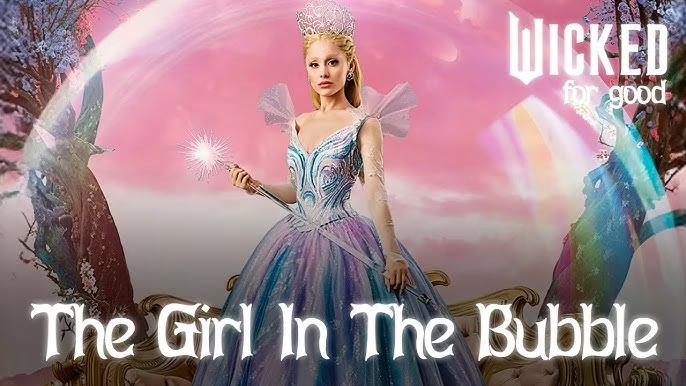
Ariana Grande’s star power is undeniable, and The Girl in the Bubble was the other brand-new original written explicitly to deepen Glinda’s storyline. The song explores the emotional consequences of privilege, isolation, and identity in a way that was designed to humanize Glinda beyond her effervescent stage persona.
The song’s tonal contrast—lighter timbres underscoring darker questions—was used to create an internal conflict for Glinda. Pop-influenced vocal ornamentation was blended with classic musical-theatre phrasing to suit Ariana Grande’s vocal strengths while keeping the residency within a cinematic-musical idiom.
Landing as a pre-release single in early November (the label promoted both new originals around the soundtrack rollout), this song became a viral talking point, especially on social feeds where fans discussed Glinda’s maturation in the sequel.
3. “Every Day More Wicked” — Wicked Movie Cast (feat. Cynthia Erivo, Ariana Grande, Michelle Yeoh)
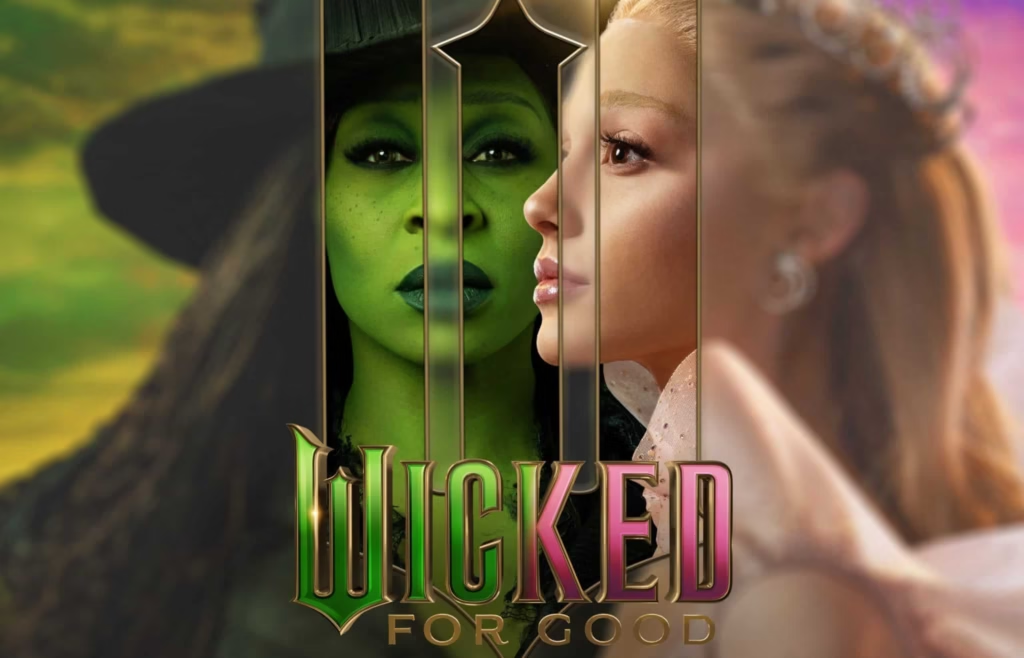
This ensemble number reprises material from the stage show but was re-contextualized for the film—with added harmonies and expanded orchestration. Because it features multiple major cast members and sets up a tonal shift early in the second film, it was a priority on the soundtrack.
The arrangement was enlarged with cinematic percussion, brass layers, and choral backing—tools used to transition a stage number into a “big-screen” anthem. It was staged to communicate rising stakes, and the soundtrack version included audio cues not present on the Broadway recording: environmental sounds and intercut dialogue were used to create immediacy.
Fans noted the film’s version as “bigger and darker” than the stage counterpart, and critics compared the expanded production to the approach used in other recent musical-film adaptations to amplify spectacle for movie audiences.
4. “Thank Goodness / I Couldn’t Be Happier” — Ariana Grande (feat. Michelle Yeoh)
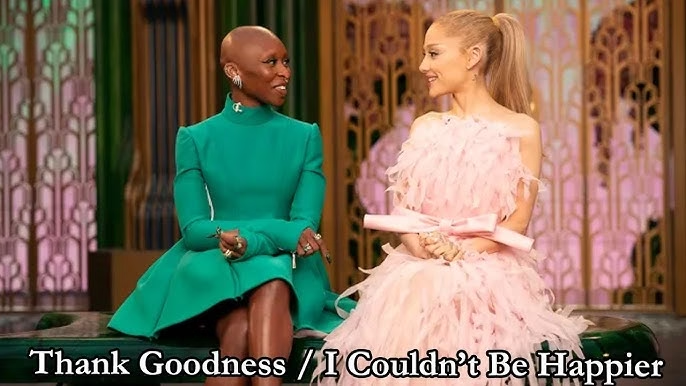
This playful duet sequence merges two related stage motifs into a cinematic set piece. The soundtrack version features Ariana Grande prominently, and a notable cameo contribution by Michelle Yeoh draws attention to the film’s investment in character moments being preserved musically.
The track balances levity with bittersweet undertones, and the vocal interplay is used to reveal the complexity of the social set pieces in Oz: grand pageantry with an undercurrent of unease. Musically, orchestral swells and modern pop production touches were blended to make it accessible to a mainstream streaming audience.
It was cited as a track that showcased the adaptation’s willingness to honor the stage’s wit while reimagining it through cinematic performance.
5. “Wonderful” — Jeff Goldblum, Ariana Grande, Cynthia Erivo
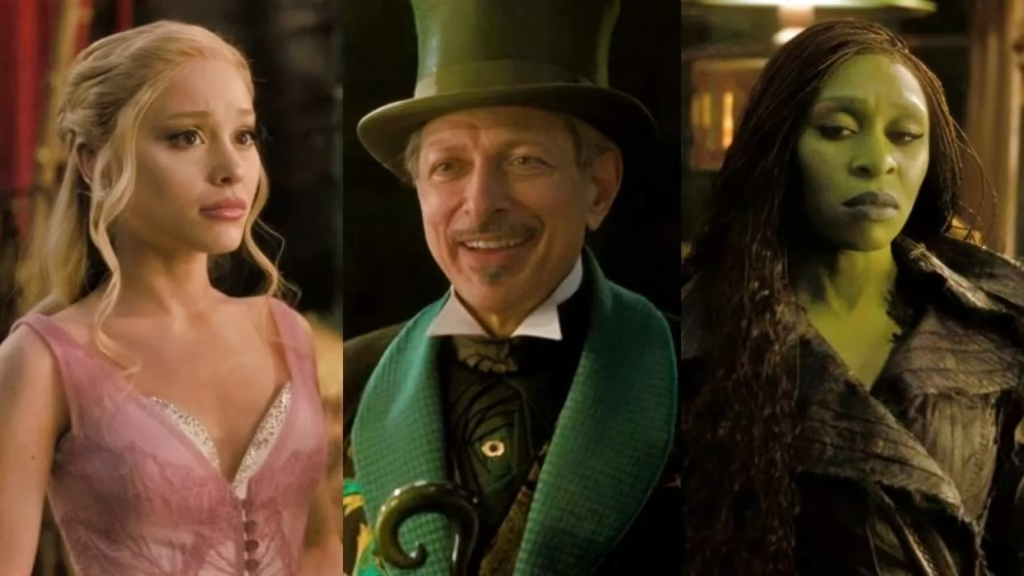
The inclusion of a legacy track, re-sung by members of the film’s star-studded cast (including Jeff Goldblum), elevated its prominence. The number serves a key narrative function and is notable because it was rearranged to highlight the film’s thematic centers—power, spectacle, and disillusionment.
Jeff Goldblum’s distinct vocal timbre provided an unexpected texture, and the song’s arrangement in the soundtrack was layered with cinematic strings and choral accents. This blend lent the track a “pageant of illusions” quality suitable for Oz’s political moments.
Reviewers often pointed to this track for the unusual casting decision and praised the interpretive risk-taking of having a non-traditional musical actor (Goldblum) inhabit such a number.
6. “The Wicked Witch of the East” — Marissa Bode, Cynthia Erivo, Ethan Slater
This track was highlighted because certain stage sequences had not previously been given wide circulation or had been reworked for the film, and this particular number was placed to amplify a key narrative revelation. The soundtrack’s inclusion of this number offered a fuller archive of the stage-to-screen transition.
The song’s role in the story is both expository and dramatic. Arrangements were adapted to suit close-mic film recording, making the performance feel intimate even when the scene was theatrically grand.
Fans appreciated the official release of a song that had been discussed in fandom circles, since it provided a canonical audio version for the first time in many contexts.
7. “I’m Not That Girl (Reprise)” — Ariana Grande
Reprises in musical theatre often carry concentrated emotional weight, and this reprise—delivered by Ariana Grande—served as a quiet, devastating counterpoint to the soundtrack’s bigger numbers. The film’s production leaned into the intimacy of the moment, and the soundtrack captured that mood.
Vocally, it allowed Grande to display a softer timbre and more restrained interpretive choices, a contrast to her more ornate pop deliveries elsewhere. The orchestration is spare, emphasizing lyrics and breath.
Many listeners highlighted this track for showing Grande’s range beyond radio pop, citing it as an example of how cinema can reveal new facets of a performer’s voice.
8. “No Good Deed” — Cynthia Erivo (from stage, carried into the film)
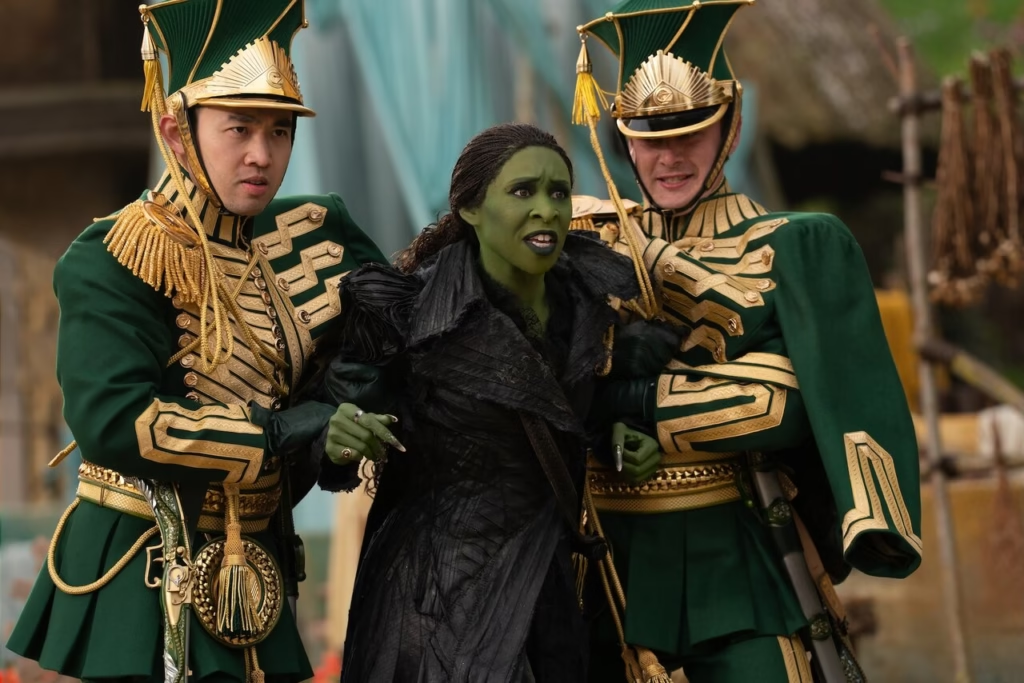
Although No Good Deed is a well-known stage piece from the original musical, its cinematic treatment gave it renewed relevance. The number was staged for the screen in a way that heightened its psychological intensity. Erivo’s performance was expected to be definitive in the public conversation about the film.
In film, close-ups and editing were used to make the song feel claustrophobic, and the audio mix emphasized breath and lyric intelligibility—choices that the soundtrack retained to preserve emotional immediacy.
Critics often pointed to the track as a tour de force for Erivo, and it was used in trailers and promotional spots to signal the film’s dramatic stakes.
9. “As Long As You’re Mine” — Cynthia Erivo & Jonathan Bailey
The duet’s inclusion was rewarded because it provided an essential character moment and romantic tension; the chemistry between the two performers was widely discussed. The track benefited from sensitive arranging that allowed both voices to shine without losing theatricality.
The duet is intimate and technically difficult, requiring careful balance. On the soundtrack, the harmony work and instrumental detail were treated with cinematic proximity—micro-phrasing and quieter dynamics—so the emotional undercurrents would translate from stage to screen.
Fans of the stage production were curious how the duet would be adapted; the soundtrack satisfied many of those expectations while introducing fresh interpretive touches.
10. “For Good” — (Title track / thematic reprise)
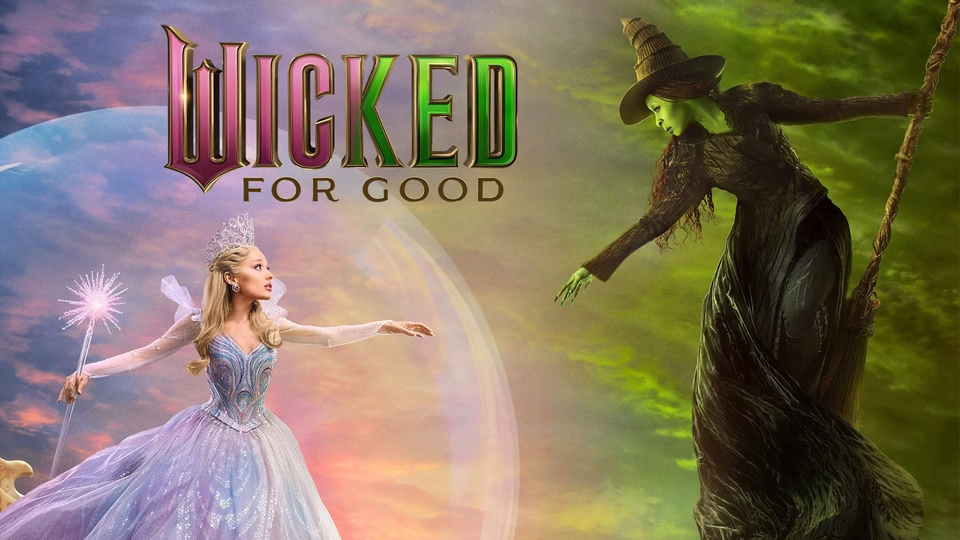
For Good is the emotional heart of Wicked’s canon: its themes of transformative friendship and empathy are central to why the musical has endured since its Broadway debut. The film’s treatment and the soundtrack’s rendition were both anticipated to keep the original song’s power while adapting it to a different medium. Given its historical importance, it is naturally among the most-discussed tracks.
The song’s structure was largely preserved, but subtle changes in vocal arrangement and orchestration were introduced to reflect the characters’ journeys as portrayed onscreen. The soundtrack retained the duet’s emotional clarity, and the mixing choices emphasized lyric intelligibility, which allowed cinematic viewers to connect quickly to the line’s resonance.
Because the song had been written from highly personal inspiration—Stephen Schwartz’s own reflections and conversations about friendship—its preservation in the film was seen as a necessary tribute to the stage original’s emotional integrity.
Final thoughts
The Wicked: For Good soundtrack functions as both a bridge and an expansion: it bridges the Broadway legacy to the cinematic present, and it expands character and story in ways that only a full-length film can permit. For listeners, the two new songs serve as gifts—new emotional centers that were written by the musical’s original voice. For long-time fans, the soundtrack preserves cherished moments in a new sonic skin. In short, the album gives both closure and fresh questions—exactly what a sequel’s soundtrack should do.
If you’re diving in for the first time, start with the new songs to hear what’s been specifically added for the film; if you’re revisiting, sample the reworked ensemble numbers to appreciate how cinematic production choices alter the scale and texture of the score. Either approach will make the soundtrack an essential part of the Wicked cultural moment that dominated film and musical conversation in late 2025.
Read more trending ENTERTAINMENT news here.